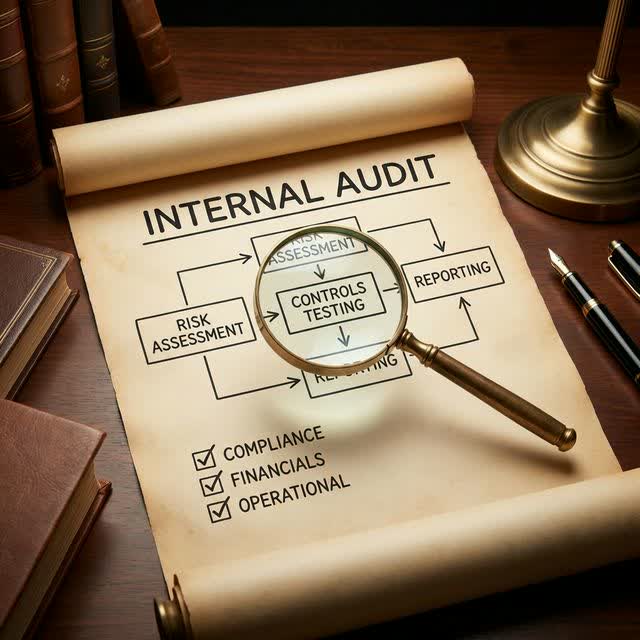
Internal Audit Framework: Building an Effective Audit Function from Scratch
schema: | { “@context”: “https://schema.org”, “@graph”: [ { “@type”: “Article”, “headline”: “Internal Audit Framework: Building an Effective Audit Function from Scratch”, “description”: “Complete guide to establishing an internal audit function. Learn frameworks, methodologies, staffing, and best practices for effective internal audit departments.”, “image”: “https://bato.com.np/assets/images/internal-audit-framework.jpg”, “datePublished”: “2026-02-17”, “dateModified”: “2026-02-21”, “author”: { “@type”: “Person”, “name”: “Jennifer Roberts” }, “publisher”: { “@type”: “Organization”, “name”: “BATO - Business Audit & Tax Organization”, “logo”: { “@type”: “ImageObject”, “url”: “https://bato.com.np/assets/images/logo.png” } } }, { “@type”: “FAQPage”, “mainEntity”: [ { “@type”: “Question”, “name”: “What is the purpose of an internal audit framework?”, “acceptedAnswer”: { “@type”: “Answer”, “text”: “An internal audit framework provides a systematic approach to evaluating and improving risk management, control, and governance processes. It ensures consistent methodology, independence, and value delivery across the organization.” } }, { “@type”: “Question”, “name”: “How do you structure an internal audit department?”, “acceptedAnswer”: { “@type”: “Answer”, “text”: “Start with a Chief Audit Executive reporting to the Audit Committee, then build teams based on organizational needs\u2014typically including operational, IT, compliance, and financial audit specialists. Staffing depends on company size and risk profile.” } }, { “@type”: “Question”, “name”: “What is risk-based audit planning?”, “acceptedAnswer”: { “@type”: “Answer”, “text”: “Risk-based audit planning prioritizes audit activities based on the organization’s risk assessment. High-risk areas receive more frequent and detailed audits, while low-risk areas may be audited less frequently or with lighter procedures.” } } ] } ] }
Establishing an effective internal audit function is crucial for organizational success. This comprehensive guide covers everything from foundational frameworks to implementation strategies.
- Understanding Internal Audit
- Building Your Internal Audit Charter
- Risk-Based Audit Planning
- Audit Engagement Process
- Building Your Audit Team
- Technology and Tools
- Quality Assurance Program
- Key Audit Focus Areas
- Reporting to the Board
- Common Challenges and Solutions
- Conclusion
- Frequently Asked Questions
- Resources
Understanding Internal Audit
Internal audit provides independent, objective assurance and consulting services designed to add value and improve an organization’s operations. It helps accomplish objectives by bringing a systematic, disciplined approach to evaluate and improve risk management, control, and governance processes.
The Three Lines of Defense Model
Modern organizations typically operate under a three lines model:
First Line: Operational Management
- Own and manage risks
- Implement corrective actions
- Maintain effective internal controls
- Report on risk and control
Second Line: Risk Management and Compliance
- Provide expertise, support, monitoring
- Develop risk management frameworks
- Compliance monitoring
- Independent review of first line
Third Line: Internal Audit
- Independent assurance
- Evaluate all risk management and control
- Report to board/audit committee
- Unrestricted access to all areas
The IIA’s International Standards
The Institute of Internal Auditors (IIA) provides globally recognized standards:
Attribute Standards (1000-1300):
- Purpose, authority, and responsibility
- Independence and objectivity
- Proficiency and due professional care
- Quality assurance and improvement program
Performance Standards (2000-2600):
- Managing the internal audit activity
- Nature of work
- Engagement planning
- Performing the engagement
- Communicating results
- Monitoring progress
Implementation Standards:
- Specific applications of attribute and performance standards
- Assurance vs. consulting engagements
Building Your Internal Audit Charter
The audit charter is the foundational document establishing the internal audit function.
Essential Components
1. Purpose and Mission
The Internal Audit Department provides independent, objective
assurance and consulting services designed to add value and
improve [Organization Name]'s operations. It assists the
organization in accomplishing its objectives by bringing a
systematic, disciplined approach to evaluate and improve the
effectiveness of risk management, control, and governance processes.
2. Authority and Scope
- Unrestricted access to all records, property, and personnel
- Authority to examine all activities, including outsourced functions
- Ability to communicate directly with the Board/Audit Committee
- Access to information systems and data
3. Independence and Objectivity
- Organizational independence (reports to Audit Committee)
- Functional reporting to CEO for day-to-day operations
- Free from interference in determining scope and performing work
- Objectivity of internal auditors maintained
4. Responsibilities
- Assess risk management processes
- Evaluate governance processes
- Review control environment
- Coordinate with external auditors
- Investigate fraud and irregularities
- Provide consulting services (when appropriate)
5. Standards and Code of Ethics
- Compliance with IIA Standards
- Adherence to Code of Ethics
- Professional certifications maintained
- Continuing professional education
6. Quality Assurance
- Internal quality reviews
- External quality assessments every 5 years
- Continuous improvement process
- Performance metrics
Charter Approval Process
Steps:
- Draft charter with input from stakeholders
- Review with senior management
- Present to Audit Committee for discussion
- Formal approval by Board of Directors
- Annual review and reaffirmation
- Update as organizational needs change
Risk-Based Audit Planning
Modern internal audit functions use risk-based approaches to prioritize activities.
Risk Assessment Methodology
1. Universe Creation Identify all auditable units:
- Business processes
- Departments and functions
- Locations and subsidiaries
- Systems and applications
- Projects and initiatives
- Third-party relationships
Example Audit Universe:
- Revenue cycle (sales, billing, collections)
- Procurement and accounts payable
- Inventory management
- IT general controls
- HR and payroll
- Financial reporting
- Compliance activities
- Project management
- Information security
- Business continuity
2. Risk Scoring Framework
Develop a consistent scoring methodology:
Inherent Risk Factors:
- Financial materiality (1-5)
- Regulatory impact (1-5)
- Complexity (1-5)
- Change/stability (1-5)
- Prior audit findings (1-5)
Control Environment:
- Management strength (1-5)
- Control design (1-5)
- Control effectiveness (1-5)
- Monitoring activities (1-5)
Calculation:
Residual Risk = (Inherent Risk - Control Environment) ×
                Management Requests × Strategic Importance
3. Prioritization Matrix
Create visual heat map:
- X-axis: Likelihood of risk occurrence
- Y-axis: Impact if risk occurs
- Color coding: Red (High), Yellow (Medium), Green (Low)
Audit Priority:
- Critical (Red): Audit within 12 months
- High (Orange): Audit within 18 months
- Medium (Yellow): Audit within 24-36 months
- Low (Green): Monitor, audit as resources permit
Multi-Year Audit Plan
Strategic Planning Horizons:
- Annual Plan: Detailed schedule and resources
- 3-Year Plan: Medium-term coverage strategy
- 5-Year Plan: Complete universe coverage
Coverage Goals:
- High-risk areas: Annually
- Medium-risk areas: Every 2-3 years
- Low-risk areas: Every 3-5 years
- Complete universe: Every 5 years minimum
Flexibility Built In:
- 10-20% time reserved for management requests
- 10-15% time for investigations and special projects
- Quarterly plan reviews and adjustments
- Continuous risk assessment updates
Audit Engagement Process
Phase 1: Planning (2-3 weeks)
1. Opening Meeting
- Meet with process owners
- Understand objectives and operations
- Identify key personnel
- Tour facilities if necessary
2. Risk and Control Assessment
- Document process flows
- Identify key risks
- Evaluate control design
- Determine testing approach
3. Detailed Audit Program
- Specific audit procedures
- Sample sizes and selection methods
- Data analytics to be performed
- Timeline and resource allocation
Deliverable: Audit planning memo with scope, objectives, and procedures
Phase 2: Fieldwork (3-6 weeks)
Testing Activities:
- Walkthroughs of key processes
- Testing control design
- Testing control effectiveness
- Substantive testing
- Data analytics
- Interviews with staff
Evidence Collection:
- Documentation review
- System screenshots
- Test results
- Interview notes
- Observation memos
Best Practices:
- Daily team meetings
- Weekly status updates to management
- Issue log maintained
- Timely escalation of concerns
Phase 3: Reporting (2 weeks)
Report Components:
1. Executive Summary
- Overall assessment
- Key findings
- Priority of issues
- Management response summary
2. Detailed Findings
- Issue description
- Risk/impact
- Root cause analysis
- Recommendations
- Management action plan
- Target completion dates
3. Rating System
Critical: Immediate action required, significant risk exposure
High: Prompt corrective action needed
Medium: Timely correction appropriate
Low: Best practice improvement opportunity
4. Conclusion
- Overall control environment assessment
- Positive observations
- Areas of strength
Report Distribution:
- Audit Committee
- Board of Directors
- CEO and CFO
- Process owners
- Other stakeholders as appropriate
Phase 4: Follow-Up (Ongoing)
Monitoring Action Plans:
- Track implementation status
- Verify corrective actions
- Test control effectiveness
- Update audit findings database
Follow-Up Schedule:
- Critical issues: 30-60 days
- High issues: 90 days
- Medium issues: 6 months
- Low issues: 1 year
Escalation:
- Overdue actions reported to Audit Committee
- Senior management intervention for persistent issues
Building Your Audit Team
Organizational Structure
Small Organization (< $100M revenue):
Chief Audit Executive
  ├─ Senior Auditor
  └─ Staff Auditor
Medium Organization ($100M - $1B):
Chief Audit Executive
  ├─ Audit Manager (Operational)
  │   ├─ Senior Auditor
  │   └─ Staff Auditor
  └─ Audit Manager (IT/Compliance)
      ├─ IT Auditor
      └─ Compliance Specialist
Large Organization (> $1B):
Chief Audit Executive
  ├─ Deputy CAE
  ├─ Audit Director (Financial)
  │   ├─ Audit Manager
  │   ├─ Senior Auditors (3)
  │   └─ Staff Auditors (4)
  ├─ Audit Director (Operational)
  │   ├─ Audit Manager
  │   ├─ Senior Auditors (3)
  │   └─ Staff Auditors (4)
  └─ Audit Director (IT/Cyber)
      ├─ IT Audit Manager
      ├─ IT Auditors (3)
      └─ Data Analytics Specialist
Staffing Considerations
Sizing Guidelines:
- Small company: 0.1-0.3% of total employees
- Mid-size: 0.2-0.4% of total employees
- Large enterprise: 0.3-0.5% of total employees
- Adjust for industry risk and complexity
Skills Mix:
- 40% staff level (1-3 years experience)
- 35% senior level (3-7 years)
- 20% manager level (7-15 years)
- 5% director/CAE level (15+ years)
Required Competencies
Technical Skills:
- Accounting and finance knowledge
- Risk assessment expertise
- Internal control frameworks (COSO, COBIT)
- Data analytics tools
- Audit software proficiency
- Industry-specific knowledge
Professional Certifications:
- CIA: Certified Internal Auditor (essential for CAE)
- CPA: Certified Public Accountant
- CISA: Certified Information Systems Auditor
- CFE: Certified Fraud Examiner
- CRMA: Certification in Risk Management Assurance
Soft Skills:
- Communication (written and verbal)
- Critical thinking
- Professional skepticism
- Objectivity and independence
- Project management
- Stakeholder management
Training and Development
Continuing Professional Education:
- 40 hours annually (IIA requirement)
- Technical skill development
- Industry knowledge
- Regulatory updates
- Soft skills enhancement
Career Progression:
Staff Auditor (0-3 years)
  ↓ 2-3 years
Senior Auditor (3-7 years)
  ↓ 3-4 years
Audit Manager (7-15 years)
  ↓ 5-8 years
Audit Director (12-20 years)
  ↓ 5-10 years
Chief Audit Executive (15+ years)
Development Programs:
- Rotating assignments across areas
- Secondments to business units
- Cross-training in IT, compliance
- Leadership development
- Mentoring programs
Technology and Tools
Audit Management Software
Leading Solutions:
- TeamMate+: Comprehensive audit management
- AuditBoard: Cloud-based platform
- Workiva: Integrated risk and reporting
- SAI360: GRC and audit software
- ACL GRC: Analytics and audit management
Key Features:
- Planning and scheduling
- Workpaper documentation
- Issue tracking
- Report generation
- Dashboard and analytics
- Integration capabilities
Data Analytics Tools
Essential Capabilities:
- ACL Analytics: Data extraction and analysis
- IDEA: Interactive Data Extraction and Analysis
- Tableau/Power BI: Visualization and dashboards
- SQL: Database querying
- Python/R: Advanced analytics and automation
Common Analytics Techniques:
- Exception testing (duplicates, gaps, outliers)
- Trend analysis
- Benford’s Law
- Stratification
- Continuous monitoring
- Predictive modeling
Continuous Auditing
Implementation Approach:
- Identify high-risk processes
- Define control objectives
- Develop automated tests
- Establish thresholds and alerts
- Monitor results
- Investigate exceptions
- Report to stakeholders
Benefits:
- Real-time risk identification
- Increased control coverage
- Earlier fraud detection
- Resource efficiency
- Prevention vs. detection focus
Quality Assurance Program
Internal Assessments
Ongoing Monitoring:
- Supervision and review of engagements
- Quality control checklists
- Workpaper review standards
- Performance metrics tracking
- Client feedback surveys
Periodic Self-Assessments:
- Annual comprehensive review
- Compliance with standards
- Effectiveness of processes
- Benchmarking against peers
- Identification of improvement areas
Key Metrics:
- % of audit plan completed
- Average cycle time per audit
- Stakeholder satisfaction scores
- % of findings implemented
- Staff utilization rates
- Training hours per auditor
External Quality Assessment
IIA Requirement:
- Independent external review every 5 years
- Assess conformance with Standards
- Evaluate effectiveness
- Provide peer benchmarking
Review Process:
- Self-assessment preparation
- Documentation review
- Interviews with stakeholders
- Testing of audit files
- Draft report and discussion
- Final report with rating
Possible Ratings:
- Generally Conforms: Highest rating achievable
- Partially Conforms: Generally complies but gaps exist
- Does Not Conform: Significant deficiencies
Continuous Improvement
Improvement Cycle:
- Identify improvement opportunity
- Analyze root cause
- Develop solution
- Implement change
- Monitor results
- Standardize if successful
Sources of Ideas:
- Quality assessment findings
- Stakeholder feedback
- Industry best practices
- Professional development
- Technology innovations
Key Audit Focus Areas
Financial Audits
Common Topics:
- Revenue recognition
- Accounts receivable and collections
- Procurement and payables
- Inventory management
- Fixed assets
- Cash management and treasury
- Financial close process
- Management reporting
Control Objectives:
- Completeness of transactions
- Accuracy of recording
- Authorization and approval
- Segregation of duties
- Physical safeguarding
- Reconciliation and monitoring
Operational Audits
Focus Areas:
- Business process efficiency
- Resource utilization
- Customer satisfaction
- Supply chain management
- Contract management
- Project management
- Quality assurance
- Safety and environmental compliance
Value-Add Approach:
- Benchmark performance
- Identify efficiency opportunities
- Recommend process improvements
- Facilitate best practice sharing
Compliance Audits
Regulatory Areas:
- SOX compliance
- Industry regulations (FDA, SEC, etc.)
- Data privacy (GDPR, CCPA)
- Anti-corruption (FCPA)
- Environmental regulations
- Labor and employment laws
- Tax compliance
Audit Approach:
- Review policies and procedures
- Test compliance with requirements
- Assess monitoring activities
- Evaluate training programs
- Report violations promptly
IT Audits
Key Components:
- IT general controls (ITGC)
- Application controls
- Cybersecurity
- Data governance
- Change management
- Access controls
- Business continuity/disaster recovery
- Cloud computing controls
Frameworks:
- COBIT 2019
- NIST Cybersecurity Framework
- ISO 27001
- SOC 2
Reporting to the Board
Audit Committee Relationship
CAE Reporting Structure:
- Functional (Primary): Reports to Audit Committee Chair
- Administrative: Reports to CEO or CFO for day-to-day
Committee Responsibilities:
- Approve audit charter
- Review and approve audit plan
- Receive audit results
- Monitor issue resolution
- Assess CAE performance
- Approve CAE compensation
Effective Committee Reporting
Quarterly Meetings:
- Executive session with CAE (no management present)
- Audit plan status and changes
- Significant findings and trends
- Management responsiveness
- Resource adequacy
- Quality assurance results
Report Components:
- High-level dashboard (metrics)
- Audit completion status
- Summary of significant findings
- Overdue management action plans
- Emerging risks
- Regulatory updates
Communication Best Practices:
- Clear, concise messaging
- Focus on high-risk issues
- Balanced perspective
- Forward-looking insights
- Action-oriented recommendations
Common Challenges and Solutions
Challenge 1: Limited Resources
Solutions:
- Co-sourcing: Supplement with external firms for specialized skills
- Technology: Leverage analytics and continuous monitoring
- Risk-based focus: Concentrate on highest risks
- Efficiency: Streamline processes, use templates
- Cross-training: Develop multi-skilled team members
Challenge 2: Resistance from Management
Solutions:
- Relationship building: Regular communication, transparency
- Consulting approach: Position as business partner
- Add value: Focus on operational improvements, not just compliance
- Education: Help management understand risk and control
- Board support: Leverage Audit Committee backing
Challenge 3: Keeping Current
Solutions:
- Professional organizations: IIA membership and events
- Webinars and training: Regular technical updates
- Peer networking: Share knowledge with other CAEs
- Industry publications: Subscribe to relevant journals
- Technology focus: Invest in skills development
Challenge 4: Demonstrating Value
Solutions:
- Metrics: Track savings, efficiencies, risks identified
- Stakeholder surveys: Measure satisfaction
- Impact stories: Document value delivered
- Benchmarking: Compare to industry standards
- Board reporting: Highlight contributions regularly
Conclusion
Building an effective internal audit function requires careful planning, appropriate resources, and executive commitment. By following established frameworks, adopting best practices, and maintaining focus on risk and value, internal audit can become a trusted advisor to the organization.
Key Success Factors:
- Strong Audit Committee support
- Clear charter and independence
- Risk-based planning
- Qualified, trained staff
- Appropriate technology
- Effective communication
- Continuous improvement mindset
- Focus on adding value
Getting Started Checklist:
- Obtain Board/Audit Committee commitment
- Develop and approve audit charter
- Conduct initial risk assessment
- Create 1-year and 3-year audit plans
- Staff the function appropriately
- Implement audit management software
- Establish reporting protocols
- Conduct first audits
- Build relationships across organization
- Continuously evolve and improve
Frequently Asked Questions
Resources
- Institute of Internal Auditors (IIA): www.theiia.org
- International Standards: Professional practices framework
- COSO Framework: Committee of Sponsoring Organizations
- COBIT: Control Objectives for Information Technology
- IIA Quality Assessment Manual: External assessment guide
- IIA Practice Guides: Detailed implementation guidance