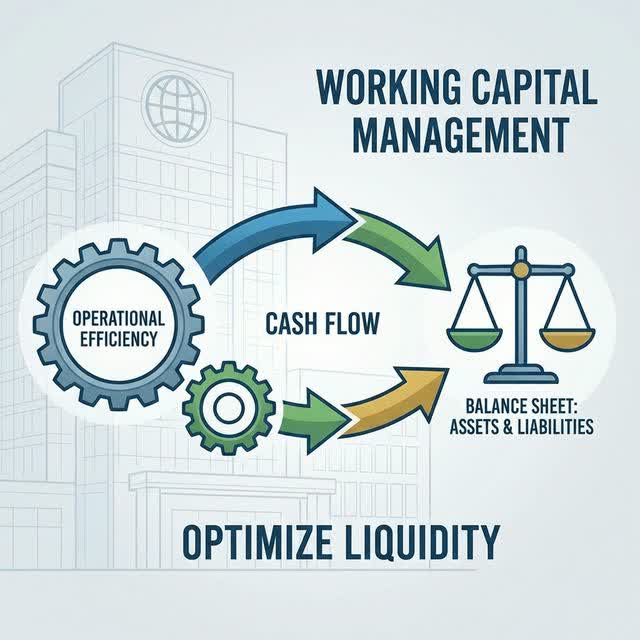
Financial Statement Analysis: Complete Guide to Ratio Analysis, Metrics, and Performance Evaluation (2026)

schema: | { “@context”: “https://schema.org”, “@graph”: [ { “@type”: “Article”, “headline”: “Financial Statement Analysis: Complete Guide to Ratio Analysis, Metrics, and Performance Evaluation (2026)”, “description”: “Comprehensive guide to financial statement analysis including ratio analysis, cash flow analysis, profitability metrics, liquidity ratios, and financial modeling techniques. Essential for investors, analysts, and finance professionals.”, “image”: “https://bato.com.np/assets/images/financial-analysis.jpg”, “datePublished”: “2026-02-18”, “dateModified”: “2026-02-21”, “author”: { “@type”: “Person”, “name”: “Jennifer Thompson” }, “publisher”: { “@type”: “Organization”, “name”: “BATO - Business Audit & Tax Organization”, “logo”: { “@type”: “ImageObject”, “url”: “https://bato.com.np/assets/images/logo.png” } } } ] }
Financial statement analysis is essential for understanding company performance, making investment decisions, and assessing credit risk. This comprehensive guide covers analytical techniques, key ratios, and interpretation frameworks used by professional analysts in 2026.
- Understanding Financial Statements
- Common-Size Analysis
- Profitability Analysis
- Efficiency Analysis
- Liquidity Analysis
- Solvency and Leverage Analysis
- Cash Flow Analysis
- Growth Analysis
- Valuation Multiples
- Advanced Analytical Techniques
- Industry-Specific Metrics
- Red Flags and Warning Signs
- Conclusion
- Resources
Understanding Financial Statements
The Three Primary Financial Statements
Income Statement (Statement of Operations):
- Revenues and expenses over a period
- Profitability measurement
- Operating vs. non-operating activities
- Earnings per share (EPS)
Balance Sheet (Statement of Financial Position):
- Assets, liabilities, and equity at a point in time
- Financial position and solvency
- Resources and obligations
- Accounting equation: Assets = Liabilities + Equity
Cash Flow Statement:
- Cash inflows and outflows over a period
- Operating, investing, and financing activities
- Cash generation vs. accounting earnings
- Liquidity and financial flexibility
Relationships Among Statements:
Net Income (Income Statement)
  ↓
Retained Earnings (Balance Sheet)
  ↓
Operating Activities (Cash Flow Statement)
Quality of Financial Information
High-Quality Financial Statements:
- Compliant: Follow GAAP or IFRS
- Transparent: Clear presentation and disclosure
- Consistent: Same policies year-over-year
- Conservative: Prudent estimates and judgments
- Comparable: Peer benchmarking possible
Red Flags for Poor Quality:
- Frequent accounting changes
- Complex ownership structures
- Aggressive revenue recognition
- Excessive one-time items
- Related party transactions not disclosed
- Auditor changes or qualifications
- Restatements
- Inconsistencies among statements
Analytical Framework
Five-Step Analysis Process:
1. Understand the Business
- Industry dynamics
- Business model
- Competitive position
- Management strategy
- Key value drivers
2. Analyze Financial Statements
- Common-size analysis
- Trend analysis
- Ratio analysis
- Cash flow analysis
3. Adjust for Comparability
- Accounting policy differences
- One-time items
- Operating vs. non-operating
- Off-balance sheet items
4. Evaluate Performance
- Profitability
- Efficiency
- Liquidity
- Solvency
- Growth
5. Forecast and Value
- Pro forma statements
- Valuation multiples
- Discounted cash flow (DCF)
- Scenario analysis
Common-Size Analysis
Vertical Common-Size
Income Statement: Express each line item as percentage of revenue.
Example:
                        │ 2026    │ 2025    │ Industry Avg
────────────────────────┼─────────┼─────────┼─────────────
Revenue                 │ 100.0%  │ 100.0%  │ 100.0%
Cost of Goods Sold      │  60.0%  │  62.0%  │  58.0%
────────────────────────┼─────────┼─────────┼─────────────
Gross Profit            │  40.0%  │  38.0%  │  42.0%
Operating Expenses      │  25.0%  │  26.0%  │  28.0%
────────────────────────┼─────────┼─────────┼─────────────
Operating Income        │  15.0%  │  12.0%  │  14.0%
Interest Expense        │   2.0%  │   2.5%  │   1.5%
────────────────────────┼─────────┼─────────┼─────────────
Pre-Tax Income          │  13.0%  │   9.5%  │  12.5%
Income Tax Expense      │   3.3%  │   2.4%  │   3.1%
────────────────────────┼─────────┼─────────┼─────────────
Net Income              │   9.7%  │   7.1%  │   9.4%
Insights:
- Gross margin improved 200 bps year-over-year
- Operating leverage evident (expenses declined as % of revenue)
- Net margin improved to 9.7%, above industry average
- Interest expense elevated vs. peers (higher leverage)
Balance Sheet: Express each item as percentage of total assets.
Example:
Assets                  │ 2026    │ 2025    │ Industry Avg
────────────────────────┼─────────┼─────────┼─────────────
Cash                    │  10.0%  │   8.0%  │   5.0%
Accounts Receivable     │  15.0%  │  16.0%  │  18.0%
Inventory               │  20.0%  │  22.0%  │  25.0%
PPE, net                │  45.0%  │  44.0%  │  40.0%
Intangibles             │  10.0%  │  10.0%  │  12.0%
────────────────────────┼─────────┼─────────┼─────────────
Total Assets            │ 100.0%  │ 100.0%  │ 100.0%

Liabilities & Equity    │         │         │
────────────────────────┼─────────┼─────────┼─────────────
Current Liabilities     │  25.0%  │  28.0%  │  30.0%
Long-Term Debt          │  35.0%  │  37.0%  │  25.0%
Equity                  │  40.0%  │  35.0%  │  45.0%
────────────────────────┼─────────┼─────────┼─────────────
Total Liab & Equity     │ 100.0%  │ 100.0%  │ 100.0%
Insights:
- Asset-intensive business (45% PP&E)
- Working capital efficiency improved (lower A/R and inventory)
- Higher leverage than industry (35% LT debt vs. 25%)
- Equity position strengthening (35% → 40%)
Horizontal Common-Size (Trend Analysis)
Express each year relative to base year (index = 100).
Example:
                        │ 2023   │ 2024   │ 2025   │ 2026
                        │ (Base) │        │        │
────────────────────────┼────────┼────────┼────────┼─────
Revenue                 │  100   │  108   │  118   │  130
Operating Income        │  100   │  112   │  128   │  156
Net Income              │  100   │  110   │  125   │  160
Total Assets            │  100   │  105   │  112   │  120
Shareholders' Equity    │  100   │  108   │  118   │  135
Insights:
- Revenue CAGR: ~9% over 3 years
- Operating income growing faster than revenue (operating leverage)
- Net income growing faster still (financial leverage)
- Asset growth 20% supporting 30% revenue growth (improving asset turnover)
- Equity growth 35% vs. 30% revenue (strengthening balance sheet)
Profitability Analysis
Gross Profit Margin
Formula: \(\text{Gross Profit Margin} = \frac{\text{Gross Profit}}{\text{Revenue}} = \frac{\text{Revenue} - \text{COGS}}{\text{Revenue}}\)
Interpretation:
- Measures profitability after direct costs
- Higher is better (pricing power, efficient production)
- Industry-specific (software ~80-90%, retail ~20-40%)
- Trend indicates pricing/cost dynamics
Example:
Year    │ Revenue │ COGS   │ Gross Profit │ GP Margin
────────┼─────────┼────────┼──────────────┼──────────
2026    │ $1,000M │ $600M  │ $400M        │ 40.0%
2025    │   $920M │ $570M  │ $350M        │ 38.0%
2024    │   $850M │ $540M  │ $310M        │ 36.5%
Analysis:
- Improving trend (36.5% → 40.0%)
- Indicates: pricing power, cost reductions, or product mix shift
Operating Profit Margin (EBIT Margin)
Formula: \(\text{Operating Margin} = \frac{\text{Operating Income (EBIT)}}{\text{Revenue}}\)
Interpretation:
- Profitability after operating expenses
- Measures operational efficiency
- Excludes interest and taxes (comparable across capital structures)
- Core business profitability
What’s Included:
- Revenue - COGS - SG&A - R&D - D&A = Operating Income
Benchmark Ranges (2026):
Industry                │ Typical Operating Margin
────────────────────────┼─────────────────────────
Technology (Software)   │ 20-35%
Pharmaceuticals         │ 25-35%
Consumer Staples        │ 10-15%
Retail                  │ 5-10%
Airlines                │ 5-12%
Utilities               │ 15-25%
Net Profit Margin
Formula: \(\text{Net Profit Margin} = \frac{\text{Net Income}}{\text{Revenue}}\)
Interpretation:
- Bottom-line profitability
- After all expenses including interest and taxes
- Affected by capital structure and tax planning
- Most comprehensive profitability measure
Example Margin Waterfall:
Revenue                 100.0%
- COGS                  (60.0%)
─────────────────────────────
Gross Profit             40.0%
- Operating Expenses    (25.0%)
─────────────────────────────
Operating Income         15.0%  ← Operating Margin
- Interest               (2.0%)
─────────────────────────────
Pre-Tax Income           13.0%
- Tax (25%)              (3.3%)
─────────────────────────────
Net Income                9.7%  ← Net Profit Margin
Return on Assets (ROA)
Formula: \(\text{ROA} = \frac{\text{Net Income}}{\text{Average Total Assets}}\)
Alternative (Operating): \(\text{ROA} = \frac{\text{EBIT} \times (1 - \text{Tax Rate})}{\text{Average Total Assets}}\)
Interpretation:
- How effectively assets generate profit
- Higher is better
- Capital intensity matters (software high ROA, manufacturing lower ROA)
- Compare to WACC (weighted average cost of capital)
DuPont Decomposition: \(\text{ROA} = \text{Net Profit Margin} \times \text{Asset Turnover}\) \(\text{ROA} = \frac{\text{Net Income}}{\text{Revenue}} \times \frac{\text{Revenue}}{\text{Assets}}\)
Example:
Company A: 5% margin × 2.0 turnover = 10% ROA (high volume, low margin)
Company B: 10% margin × 1.0 turnover = 10% ROA (low volume, high margin)
Return on Equity (ROE)
Formula: \(\text{ROE} = \frac{\text{Net Income}}{\text{Average Shareholders' Equity}}\)
Interpretation:
- Return to equity holders
- Key metric for investors
- Target: 15-20%+ for mature companies
- Compare to cost of equity
DuPont Three-Factor Model: \(\text{ROE} = \text{Net Margin} \times \text{Asset Turnover} \times \text{Equity Multiplier}\) \(\text{ROE} = \frac{\text{NI}}{\text{Revenue}} \times \frac{\text{Revenue}}{\text{Assets}} \times \frac{\text{Assets}}{\text{Equity}}\)
Components:
- Net Margin: Profitability (operating efficiency + tax/interest)
- Asset Turnover: Efficiency (how well assets generate sales)
- Equity Multiplier: Leverage (financial leverage = Assets/Equity)
Example:
                    │ Company X │ Company Y │ Company Z
────────────────────┼───────────┼───────────┼──────────
Net Margin          │ 10%       │ 5%        │ 8%
Asset Turnover      │ 1.5x      │ 3.0x      │ 2.0x
Equity Multiplier   │ 2.0x      │ 1.5x      │ 2.5x
────────────────────┼───────────┼───────────┼──────────
ROE                 │ 30%       │ 22.5%     │ 40%
Insights:
- Company X: High margin, moderate efficiency and leverage
- Company Y: Low margin, high efficiency (retailer profile)
- Company Z: Moderate margin, levered (financial leverage driving ROE)
Five-Factor DuPont: \(\text{ROE} = \frac{\text{NI}}{\text{EBT}} \times \frac{\text{EBT}}{\text{EBIT}} \times \frac{\text{EBIT}}{\text{Rev}} \times \frac{\text{Rev}}{\text{Assets}} \times \frac{\text{Assets}}{\text{Equity}}\)
Components:
- Tax burden: (1 - tax rate)
- Interest burden: (EBT / EBIT)
- Operating margin: (EBIT / Revenue)
- Asset turnover: (Revenue / Assets)
- Leverage: (Assets / Equity)
Return on Invested Capital (ROIC)
Formula: \(\text{ROIC} = \frac{\text{NOPAT}}{\text{Invested Capital}}\)
Where:
- NOPAT = Net Operating Profit After Tax = EBIT × (1 - Tax Rate)
- Invested Capital = Equity + Debt - Cash (or: Total Assets - Non-Interest Bearing Current Liabilities)
Interpretation:
- Return on all capital (debt + equity)
- Measures operating performance independent of capital structure
- Compare to WACC:
- ROIC > WACC: Creating value
- ROIC < WACC: Destroying value
- Key metric for value-based management
Example:
EBIT: $150M
Tax Rate: 25%
NOPAT: $150M × (1 - 0.25) = $112.5M

Equity: $400M
Debt: $300M
Cash: $50M
Invested Capital: $400M + $300M - $50M = $650M

ROIC: $112.5M / $650M = 17.3%

If WACC = 10%, then Economic Profit = (17.3% - 10.0%) × $650M = $47.5M
Efficiency Analysis
Asset Turnover Ratios
Total Asset Turnover: \(\text{Asset Turnover} = \frac{\text{Revenue}}{\text{Average Total Assets}}\)
- Higher is better (more revenue per dollar of assets)
- Industry-dependent
- Retailers high (3-5x), utilities low (0.3-0.5x)
Fixed Asset Turnover: \(\text{Fixed Asset Turnover} = \frac{\text{Revenue}}{\text{Average Net PP&E}}\)
- Measures utilization of property, plant, equipment
- Capital-intensive businesses scrutinized
Example:
                        │ 2026   │ 2025   │ Industry
────────────────────────┼────────┼────────┼─────────
Revenue                 │ $1,000M│ $920M  │
Avg Total Assets        │  $500M │ $460M  │
Avg PP&E (net)          │  $225M │ $215M  │
────────────────────────┼────────┼────────┼─────────
Total Asset Turnover    │ 2.0x   │ 2.0x   │ 1.8x
Fixed Asset Turnover    │ 4.4x   │ 4.3x   │ 4.0x
Insight: Company efficiently utilizing assets, above industry average.
Working Capital Turnover Ratios
Receivables Turnover and Days Sales Outstanding (DSO): \(\text{Receivables Turnover} = \frac{\text{Revenue}}{\text{Average Accounts Receivable}}\) \(\text{DSO} = \frac{365}{\text{Receivables Turnover}} = \frac{\text{Avg A/R} \times 365}{\text{Revenue}}\)
- DSO: Average days to collect receivables
- Lower is better (faster collection)
- Compare to payment terms (if 30 days net, DSO should be ~30-40)
Inventory Turnover and Days Inventory Outstanding (DIO): \(\text{Inventory Turnover} = \frac{\text{COGS}}{\text{Average Inventory}}\) \(\text{DIO} = \frac{365}{\text{Inventory Turnover}} = \frac{\text{Avg Inventory} \times 365}{\text{COGS}}\)
- DIO: Average days inventory held
- Lower is better (less capital tied up, fresher product)
- Industry-dependent (perishables low, heavy equipment high)
Payables Turnover and Days Payables Outstanding (DPO): \(\text{Payables Turnover} = \frac{\text{COGS or Purchases}}{\text{Average Accounts Payable}}\) \(\text{DPO} = \frac{365}{\text{Payables Turnover}} = \frac{\text{Avg A/P} \times 365}{\text{COGS}}\)
- DPO: Average days to pay suppliers
- Higher can be better (free financing) but can strain relationships
Cash Conversion Cycle (CCC): \(\text{CCC} = \text{DSO} + \text{DIO} - \text{DPO}\)
- Measures how long cash tied up in operations
- Lower is better
- Negative CCC ideal (collect before paying)
Example:
                        │ 2026   │ 2025   │ Industry
────────────────────────┼────────┼────────┼─────────
DSO                     │ 45 days│ 50 days│ 48 days
DIO                     │ 60 days│ 68 days│ 65 days
DPO                     │ 40 days│ 38 days│ 42 days
────────────────────────┼────────┼────────┼─────────
CCC                     │ 65 days│ 80 days│ 71 days
Insight: Improving working capital management (80 → 65 days), approaching industry average.
Famous Example: Amazon (Negative CCC)
- Collects from customers immediately (credit card)
- Holds inventory briefly (~30 days)
- Pays suppliers in 60+ days
- Result: Negative CCC (uses supplier financing)
Liquidity Analysis
Current Ratio
Formula: \(\text{Current Ratio} = \frac{\text{Current Assets}}{\text{Current Liabilities}}\)
Interpretation:
- Ability to pay short-term obligations
- Target: 1.5 - 2.0 (varies by industry)
- Too low: Liquidity risk
- Too high: Inefficient capital use
Example:
Current Assets: $400M (Cash $100M, A/R $150M, Inventory $150M)
Current Liabilities: $250M
Current Ratio: $400M / $250M = 1.6x
Quick Ratio (Acid Test)
Formula: \(\text{Quick Ratio} = \frac{\text{Current Assets} - \text{Inventory}}{\text{Current Liabilities}}\)
Or: \(\text{Quick Ratio} = \frac{\text{Cash} + \text{Marketable Securities} + \text{A/R}}{\text{Current Liabilities}}\)
Interpretation:
- More conservative than current ratio
- Excludes inventory (may not be quickly convertible)
- Target: 1.0+ (can pay current liabilities without selling inventory)
Example:
Quick Assets: $250M (Cash $100M, A/R $150M)
Current Liabilities: $250M
Quick Ratio: $250M / $250M = 1.0x
Cash Ratio
Formula: \(\text{Cash Ratio} = \frac{\text{Cash} + \text{Marketable Securities}}{\text{Current Liabilities}}\)
Interpretation:
- Most conservative liquidity measure
- Only most liquid assets
- Target: 0.2 - 0.5 typical, higher for uncertain environments
Example:
Cash + Marketable Securities: $100M
Current Liabilities: $250M
Cash Ratio: $100M / $250M = 0.4x
Operating Cash Flow Ratio
Formula: \(\text{OCF Ratio} = \frac{\text{Operating Cash Flow}}{\text{Current Liabilities}}\)
Interpretation:
- Cash-based liquidity measure
- How many times operating cash flow covers current liabilities
- Target: 0.4 - 0.6+
Example:
Operating Cash Flow (annual): $150M
Current Liabilities: $250M
OCF Ratio: $150M / $250M = 0.6x
Insight: Strong - operating cash flow covers 60% of current liabilities annually.
Solvency and Leverage Analysis
Debt-to-Equity Ratio
Formula: \(\text{Debt-to-Equity} = \frac{\text{Total Debt}}{\text{Total Shareholders' Equity}}\)
Interpretation:
- Financial leverage
- Higher ratio = more leverage = more risk
- Industry-dependent (utilities 2-3x, tech 0-0.5x)
Example:
                    │ Company A │ Company B │ Company C
────────────────────┼───────────┼───────────┼──────────
Total Debt          │ $300M     │ $150M     │ $500M
Shareholders' Equity│ $200M     │ $350M     │ $200M
────────────────────┼───────────┼───────────┼──────────
Debt-to-Equity      │ 1.5x      │ 0.43x     │ 2.5x
Profile             │ Moderate  │ Low       │ High
Debt-to-Assets Ratio
Formula: \(\text{Debt-to-Assets} = \frac{\text{Total Debt}}{\text{Total Assets}}\)
Interpretation:
- Percentage of assets financed by debt
- Target: < 50% generally (varies by industry)
Equity Multiplier
Formula: \(\text{Equity Multiplier} = \frac{\text{Total Assets}}{\text{Total Shareholders' Equity}}\)
Relationship: \(\text{Equity Multiplier} = 1 + \text{Debt-to-Equity Ratio}\)
Interpretation:
- Assets per dollar of equity
- 2.0x means 50% equity, 50% debt
- 3.0x means 33% equity, 67% debt
Interest Coverage Ratio
Formula: \(\text{Interest Coverage} = \frac{\text{EBIT}}{\text{Interest Expense}}\)
Alternative (Cash-Based): \(\text{Interest Coverage} = \frac{\text{EBITDA}}{\text{Interest Expense}}\)
Interpretation:
- Ability to pay interest obligations
- Target: 3x+ minimum, 5-10x comfortable
- < 1.5x: Distress warning
Example:
EBIT: $150M
Interest Expense: $25M
Interest Coverage: $150M / $25M = 6.0x
Insight: Strong coverage - EBIT covers interest 6 times.
Credit Rating Implications:
Interest Coverage │ Typical Credit Rating
──────────────────┼────────────────────────
> 12x             │ AAA
8-12x             │ AA
6-8x              │ A
4-6x              │ BBB (Investment Grade)
2.5-4x            │ BB
1.5-2.5x          │ B
< 1.5x            │ CCC or below (Distressed)
Debt Service Coverage Ratio (DSCR)
Formula: \(\text{DSCR} = \frac{\text{Operating Income (or EBITDA)}}{\text{Total Debt Service}}\)
Where Total Debt Service = Principal + Interest payments
Interpretation:
- Ability to service all debt obligations (not just interest)
- Lenders focus on this
- Target: 1.25x+ minimum
Example:
EBITDA: $200M
Interest Expense: $25M
Principal Repayment: $50M
Total Debt Service: $75M

DSCR: $200M / $75M = 2.67x
Financial Leverage and Bankruptcy Risk
Altman Z-Score (Manufacturing): \(Z = 1.2X_1 + 1.4X_2 + 3.3X_3 + 0.6X_4 + 1.0X_5\)
Where:
- $X_1$ = Working Capital / Total Assets
- $X_2$ = Retained Earnings / Total Assets
- $X_3$ = EBIT / Total Assets
- $X_4$ = Market Value of Equity / Book Value of Total Liabilities
- $X_5$ = Sales / Total Assets
Interpretation:
- Z > 2.99: “Safe” zone
- 1.81 < Z < 2.99: “Grey” zone
- Z < 1.81: “Distress” zone (high bankruptcy probability)
Cash Flow Analysis
Operating Cash Flow
Components:
Net Income
+ Depreciation & Amortization (non-cash)
+ Other non-cash expenses
- Changes in Working Capital:
  - Increase in A/R (use of cash)
  + Decrease in A/R (source of cash)
  - Increase in Inventory (use of cash)
  + Increase in A/P (source of cash)
= Operating Cash Flow
Quality of Earnings: Compare Operating Cash Flow to Net Income:
- OCF > NI: High quality (cash generated)
- OCF < NI: Lower quality (accruals)
- Ratio > 1.0: Good
- Ratio > 1.2: Excellent
Example:
                        │ 2026   │ 2025
────────────────────────┼────────┼────────
Net Income              │ $100M  │ $80M
Operating Cash Flow     │ $140M  │ $95M
────────────────────────┼────────┼────────
OCF / NI Ratio          │ 1.40x  │ 1.19x
Insight: Strong, improving quality - company converting earnings to cash effectively.
Free Cash Flow (FCF)
Formula: \(\text{FCF} = \text{Operating Cash Flow} - \text{Capital Expenditures}\)
Or: \(\text{FCF} = \text{OCF} - \text{CapEx}\)
Free Cash Flow to Equity (FCFE): \(\text{FCFE} = \text{FCF} - \text{Interest} (1-t) + \text{Net Borrowing}\)
Free Cash Flow to Firm (FCFF): \(\text{FCFF} = \text{NOPAT} + \text{D&A} - \text{CapEx} - \Delta \text{NWC}\)
Interpretation:
- Cash available for distribution (dividends, buybacks) or debt repayment
- Key indicator of financial health
- Used in DCF valuation
Example:
Operating Cash Flow: $140M
Capital Expenditures: $60M
Free Cash Flow: $140M - $60M = $80M

Uses of FCF:
- Dividends: $30M
- Share Buybacks: $20M
- Debt Repayment: $15M
- Cash Build: $15M
Total: $80M
FCF Margin and Conversion
FCF Margin: \(\text{FCF Margin} = \frac{\text{Free Cash Flow}}{\text{Revenue}}\)
FCF Conversion: \(\text{FCF Conversion} = \frac{\text{Free Cash Flow}}{\text{Net Income}}\)
\[\text{FCF Conversion} = \frac{\text{Free Cash Flow}}{\text{Operating Cash Flow}}\]Example:
                        │ 2026   │ 2025   │ Industry
────────────────────────┼────────┼────────┼─────────
Revenue                 │ $1,000M│ $920M  │
Net Income              │  $100M │  $80M  │
Operating Cash Flow     │  $140M │  $95M  │
CapEx                   │   $60M │  $55M  │
Free Cash Flow          │   $80M │  $40M  │
────────────────────────┼────────┼────────┼─────────
FCF Margin              │   8.0% │  4.3%  │ 6.0%
FCF / Net Income        │   80%  │  50%   │ 70%
FCF / OCF               │   57%  │  42%   │ 60%
Insight: Strong improvement in FCF generation. Margin above industry. CapEx declining as % of OCF.
Growth Analysis
Revenue Growth
Year-over-Year Growth: \(\text{YoY Growth} = \frac{\text{Revenue}_{t} - \text{Revenue}_{t-1}}{\text{Revenue}_{t-1}}\)
Compound Annual Growth Rate (CAGR): \(\text{CAGR} = \left(\frac{\text{Revenue}_{\text{end}}}{\text{Revenue}_{\text{start}}}\right)^{\frac{1}{n}} - 1\)
Organic vs. Inorganic Growth:
- Organic: Internal growth (new customers, price increases, new products)
- Inorganic: Acquisitions
Example:
Year │ Revenue │ YoY Growth │ Acquisitions │ Organic Growth
─────┼─────────┼────────────┼──────────────┼───────────────
2023 │  $800M  │    -       │     -        │      -
2024 │  $880M  │  10.0%     │   $50M       │   3.75%
2025 │  $960M  │   9.1%     │   $40M       │   4.5%
2026 │ $1,050M │   9.4%     │   $30M       │   6.3%

3-Year CAGR: ((1,050/800)^(1/3)) - 1 = 9.5%
Sustainable Growth Rate
Formula: \(\text{SGR} = \text{ROE} \times (1 - \text{Dividend Payout Ratio})\)
Interpretation:
- Maximum growth rate without external equity financing
- Assumes constant debt-to-equity ratio
Example:
ROE: 15%
Dividend Payout Ratio: 40%
Retention Ratio: 60%
SGR: 15% × 60% = 9.0%
Implication: Company can grow at 9% per year using retained earnings without new equity or increasing leverage.
Valuation Multiples
Price-to-Earnings (P/E) Ratio
Formula: \(\text{P/E Ratio} = \frac{\text{Stock Price}}{\text{Earnings Per Share (EPS)}}\)
Or enterprise-wide: \(\text{P/E Ratio} = \frac{\text{Market Capitalization}}{\text{Net Income}}\)
Trailing P/E: Uses last 12 months (LTM) earnings Forward P/E: Uses next 12 months (NTM) expected earnings
Interpretation:
- How much investors pay per dollar of earnings
- Higher P/E: Growth expectations, quality premium
- Lower P/E: Value opportunity or concerns
Typical Ranges (2026):
Category                │ P/E Range
────────────────────────┼──────────────
High Growth Tech        │ 30-60x
Mature Tech             │ 20-30x
Consumer Staples        │ 15-25x
Financials              │ 10-15x
Cyclicals (peak)        │ 8-12x
Distressed              │ < 10x or negative
Market Average (S&P 500)│ 18-22x
PEG Ratio (P/E to Growth): \(\text{PEG} = \frac{\text{P/E Ratio}}{\text{EPS Growth Rate (\%)}}\)
- PEG < 1: Potentially undervalued relative to growth
- PEG > 1: Potentially overvalued relative to growth
Example:
Stock Price: $50
EPS (LTM): $2.50
EPS Growth Rate: 20%

P/E: $50 / $2.50 = 20x
PEG: 20 / 20 = 1.0x
Enterprise Value Multiples
Enterprise Value (EV): \(\text{EV} = \text{Market Cap} + \text{Debt} + \text{Minority Interest} + \text{Preferred Stock} - \text{Cash}\)
EV/EBITDA: \(\text{EV/EBITDA} = \frac{\text{Enterprise Value}}{\text{EBITDA}}\)
Advantages:
- Capital structure-neutral (comparable across different leverage)
- Less affected by accounting differences (depreciation)
- Widely used in M&A
Typical Ranges:
Category                │ EV/EBITDA
────────────────────────┼─────────────
High Growth Tech        │ 20-40x
Software (SaaS)         │ 15-30x
Industrials             │ 8-12x
Utilities               │ 7-10x
Retailers               │ 6-10x
EV/Sales: \(\text{EV/Sales} = \frac{\text{Enterprise Value}}{\text{Revenue}}\)
- Useful for unprofitable high-growth companies
- SaaS companies often trade at 5-15x revenue
Price-to-Book (P/B) Ratio
Formula: \(\text{P/B Ratio} = \frac{\text{Market Cap}}{\text{Book Value of Equity}}\)
Or per share: \(\text{P/B Ratio} = \frac{\text{Stock Price}}{\text{Book Value Per Share}}\)
Interpretation:
- P/B > 1: Market values company above accounting book value
- P/B < 1: Potential value opportunity or issues
- Asset-heavy businesses (banks, manufacturers): 1-2x typical
- Asset-light businesses (tech, services): 3-10x+ typical
ROE Relationship: Higher ROE companies trade at higher P/B multiples.
If ROE = Cost of Equity → P/B = 1.0x
If ROE > Cost of Equity → P/B > 1.0x
If ROE < Cost of Equity → P/B < 1.0x
Advanced Analytical Techniques
DuPont Analysis in Practice
Case Study: Company Analysis
                        │ Company X│ Industry Avg│ Variance
────────────────────────┼──────────┼─────────────┼─────────
ROE                     │ 18.0%    │ 15.0%       │ +3.0%
  Net Margin            │  6.0%    │  5.0%       │ +1.0%
  Asset Turnover        │  2.0x    │  2.0x       │  0.0x
  Equity Multiplier     │  1.5x    │  1.5x       │  0.0x
Conclusion: ROE advantage driven entirely by superior profitability (net margin), not leverage or efficiency.
Segment Analysis
Break down performance by:
- Business segment
- Geographic region
- Product line
Example:
Segment    │ Revenue │ % Total │ Op Income │ Op Margin │ Growth
───────────┼─────────┼─────────┼───────────┼───────────┼───────
Americas   │  $600M  │  60%    │  $90M     │  15.0%    │  8%
Europe     │  $250M  │  25%    │  $30M     │  12.0%    │  12%
Asia-Pac   │  $150M  │  15%    │  $30M     │  20.0%    │  25%
───────────┼─────────┼─────────┼───────────┼───────────┼───────
Total      │ $1,000M │ 100%    │ $150M     │  15.0%    │  12%
Insights:
- Asia-Pacific: Highest margin and fastest growth (prioritize investment)
- Europe: Lower margin but strong growth (scale opportunity)
- Americas: Mature, stable cash generator
Peer Benchmarking
Identify Comparable Companies:
- Same industry
- Similar size
- Similar business model
- Similar geography
Comparative Analysis:
Metric              │ Target │ Peer A │ Peer B │ Industry
────────────────────┼────────┼────────┼────────┼─────────
Revenue Growth      │  12%   │   8%   │  15%   │  10%
Gross Margin        │  40%   │  38%   │  42%   │  39%
Operating Margin    │  15%   │  12%   │  18%   │  14%
Net Margin          │   9.7% │   8%   │  11%   │   9%
ROE                 │  18%   │  15%   │  20%   │  16%
ROA                 │  10%   │   9%   │  12%   │  10%
P/E Ratio           │  22x   │  18x   │  25x   │  20x
EV/EBITDA           │  12x   │  10x   │  14x   │  11x
Debt/Equity         │  0.5x  │  0.7x  │  0.3x  │  0.6x
Current Ratio       │  1.8x  │  1.5x  │  2.0x  │  1.7x
Insights:
- Target growing faster than peers
- Margins in-line with industry
- ROE above average
- Valuation premium vs. peers justified by growth
- Conservative leverage relative to peers
Industry-Specific Metrics
Technology/SaaS
Key Metrics:
- Annual Recurring Revenue (ARR): Predictable revenue stream
- Monthly Recurring Revenue (MRR): Monthly subscription revenue
- Customer Acquisition Cost (CAC): Cost to acquire customer
- Lifetime Value (LTV): Expected revenue from customer
- LTV/CAC Ratio: Target 3:1 or higher
- Net Revenue Retention (NRR): Existing customer revenue growth (target: 110-130%+)
- Churn Rate: Customer or revenue attrition (target: <5% annually for B2B)
- Magic Number: (New ARR × 4) / Sales & Marketing Spend (target: >0.75)
- Rule of 40: Revenue Growth % + FCF Margin % should exceed 40%
Retail
Key Metrics:
- Same-Store Sales (SSS): Growth at existing locations
- Sales Per Square Foot: Revenue density
- Inventory Turnover: 8-12x typical for apparel
- Gross Margin Return on Investment (GMROI): Gross Profit / Avg Inventory Cost
Banks/Financial Institutions
Key Metrics:
- Net Interest Margin (NIM): (Interest Income - Interest Expense) / Earning Assets
- Efficiency Ratio: Non-Interest Expense / (Net Interest Income + Non-Interest Income)
- Return on Assets (ROA): Target: 1.0-1.5% for banks
- Return on Equity (ROE): Target: 10-15%+
- Tier 1 Capital Ratio: Regulatory capital / Risk-Weighted Assets (Basel III minimum: 6%)
- Net Charge-Off Ratio: Credit losses / Average Loans
- Non-Performing Loan Ratio: NPLs / Total Loans
Manufacturing
Key Metrics:
- Capacity Utilization: Actual Output / Maximum Capacity (target: 80-85%)
- Overall Equipment Effectiveness (OEE): Availability × Performance × Quality
- Inventory Turnover: Target: 6-12x depending on product
- Working Capital as % of Sales: Target: <15-20%
Red Flags and Warning Signs
Earnings Quality Issues
1. Divergence of Net Income and Cash Flow
- Net Income growing but OCF flat or declining
- Aggressive accruals
2. Declining Cash Conversion
- Rising DSO, DIO
- Working capital deterioration
3. Frequent One-Time Items
- Restructuring charges every year
- Goodwill impairments
- “Adjusted” earnings exclude too much
4. Revenue Recognition Issues
- Channel stuffing
- Bill-and-hold arrangements
- Recording revenue before earned
5. Inventory Build-Up
- Inventory growing faster than revenue
- Potential obsolescence
- Production outpacing demand
Liquidity Warning Signs
1. Declining Liquidity Ratios
- Current ratio falling below 1.0
- Quick ratio < 0.5
2. Negative Operating Cash Flow
- Especially if multi-year trend
- Company burning cash
3. Short-Term Debt Maturing
- Large debt maturities approaching
- Limited cash or refinancing capability
4. Covenant Violations
- Actual or imminent breach of debt covenants
- Potential acceleration of debt
Leverage Concerns
1. Rising Debt Levels
- Debt-to-equity increasing
- Interest coverage declining
2. Off-Balance Sheet Obligations
- Operating leases (pre-IFRS 16 / ASC 842)
- Contingent liabilities
- Pension underfunding
3. Distressed Signals
- Interest coverage < 2x
- Z-Score in distress zone
- Credit rating downgrades
Management and Governance Issues
1. Related Party Transactions
- Dealings with insiders
- Lack of arm’s length terms
2. Frequent Management Turnover
- CFO, CEO changes
- Multiple changes raise concern
3. Auditor Changes or Qualifications
- Switching auditors (why?)
- Going concern qualifications
- Material weaknesses in internal controls
4. Aggressive Accounting
- Policies at edge of acceptability
- Frequent changes to boost income
- Lack of conservatism in estimates
Conclusion
Financial statement analysis is both art and science. Ratios and metrics provide quantitative insights, but understanding the business, industry dynamics, and qualitative factors is equally important.
Keys to Effective Analysis:
- Context Matters: Compare to history, peers, industry
- Look Beyond the Numbers: Understand the business model
- Multiple Perspectives: Use profitability, efficiency, liquidity, solvency together
- Cash is King: Always reconcile earnings to cash flow
- Question Everything: Healthy skepticism prevents costly mistakes
- Trends Over Points: Single period less meaningful than trajectory
- Integrate Qualitative: Management quality, competitive position, industry trends
- Use Multiple Methods: No single ratio tells full story
Final Thought: Master the fundamentals, practice regularly, and stay curious. Financial analysis skills improve with experience and exposure to diverse situations.
Resources
- Financial Statements: Company investor relations websites (10-K, 10-Q)
- Data Sources: Bloomberg, FactSet, S&P Capital IQ, Yahoo Finance, EDGAR
- Accounting Standards: FASB.org (US GAAP), IFRS.org
- Analysis Tools: Excel, Tableau, Python (pandas)
- Further Reading: Financial Statement Analysis by Martin Fridson, Accounting for Value by Stephen Penman
Related Articles
- Cash Flow Statement Analysis: What Good and Bad Cash Flow Actually Looks Like
- Financial Modeling for Startups: Build a 3-Statement Model That Actually Works
- M&A Financial Due Diligence Checklist: What Buyers Actually Review
- Business Valuation Fundamentals: Complete Guide to DCF, Comparable Companies, Asset-Based, and Precedent Transaction Analysis