Entity Selection for Startups: LLC vs. C Corporation vs. S Corporation Tax and Legal Guide (2026)

schema: | { “@context”: “https://schema.org”, “@graph”: [ { “@type”: “Article”, “headline”: “Entity Selection for Startups: LLC vs. C Corporation vs. S Corporation Tax and Legal Guide (2026)”, “description”: “Comprehensive guide to startup entity selection covering LLC vs. C Corp vs. S Corp legal structures, tax implications, investor preferences, equity compensation, and formation process. Critical decision at company founding.”, “image”: “https://bato.com.np/assets/images/startup-entity-selection.jpg”, “datePublished”: “2026-02-19”, “dateModified”: “2026-02-21”, “author”: { “@type”: “Person”, “name”: “Thomas Wright” }, “publisher”: { “@type”: “Organization”, “name”: “BATO - Business Audit & Tax Organization”, “logo”: { “@type”: “ImageObject”, “url”: “https://bato.com.np/assets/images/logo.png” } } }, { “@type”: “FAQPage”, “mainEntity”: [ { “@type”: “Question”, “name”: “What is the best legal structure for a startup?”, “acceptedAnswer”: { “@type”: “Answer”, “text”: “For high-growth startups seeking venture capital, a Delaware C Corporation is typically the best structure. For small businesses or lifestyle businesses, an LLC is often preferred due to its flexibility and pass-through taxation.” } }, { “@type”: “Question”, “name”: “Why do investors prefer C Corporations?”, “acceptedAnswer”: { “@type”: “Answer”, “text”: “Investors prefer C Corporations because they allow for different classes of stock (preferred vs. common), are recognized standardly in legal frameworks, and avoid pass-through tax issues for the investors.” } }, { “@type”: “Question”, “name”: “Can an LLC convert to a C Corp later?”, “acceptedAnswer”: { “@type”: “Answer”, “text”: “Yes, an LLC can convert to a C Corp. However, it can be complex and expensive, so choosing the right entity from the start is often recommended if you plan to raise capital.” } } ] } ] }
Choosing the right business entity is one of the most critical decisions in startup formation. This guide covers the tradeoffs between major entity types in 2026.
Entity Structure Overview
Comparing Business Entities
Summary Comparison:
| Feature | LLC | C Corp | S Corp |
|---------|-----|--------|--------|
| Taxation | Pass-through | Corporate (double tax) | Pass-through |
| Owner Liability | Protected | Protected | Protected |
| Investor Friendly | No | Yes (standard) | Mixed |
| Equity Compensation | Limited | Full | Full |
| Admin Burden | Low | High | High |
| State Costs | Low-Mod | Moderate | Moderate |
| Tax Complexity | Low-Mod | High | High |
| IPO Ready | No (convert) | Yes | No (convert) |
| Preferred Stock | Limited | Full | Full |
| Startup Typical | Rare | Almost all | Rare |

Most Common Startup Choice: C Corporation (95%+ of VC-backed startups)
Entity Type Deep Dives
Limited Liability Company (LLC):
Definition: Hybrid entity combining partnership & corporation elements
Taxation: Pass-through (business files informational return only)
Owner liability: Limited (personal assets protected)

Tax Treatment:

Default (Disregarded Entity):
- Single-member LLC taxed as sole proprietorship
- Multi-member LLC taxed as partnership
- Income/losses pass to owner/member returns
- Example: LLC with 2 founders paying $200K profit
  Each founder's return includes $100K business income
  Tax at individual rates (vs. corporate rate)

Election as C Corp (for tax purposes):
- LLC can elect corporate taxation
- File Form 8832 with IRS
- Effective for professional entities (law, medical)

Characteristic Tax Treatment Example:

Founder runs $500K revenue LLC (no employees):
- Business income: $500K revenue - $250K expenses = $250K profit
- Files Schedule C on personal tax return
- Pays self-employment taxes on profit (~15.3% for 92.35% of profit)
- Total tax: ~$250K × 37% (income) + ~$250 × 15.3% (SE tax) = ~$130K
- Net after tax: ~$120K

Advantages of LLC:

✓ Pass-through taxation (avoid corporate-level tax)
✓ Flexibility in profit distribution (partners needn't distribute same %)
✓ Limited paperwork (no corporate minutes, less compliance)
✓ Easy formation (simple filing, low cost)
✓ Ownership flexibility (flexible capital structure)
✓ Self-employed deduction possible (~20% of profit)

Disadvantages of LLC:

✗ Investors avoid LLCs (prefer C Corps)
✗ No preferred stock (critical for institutional investors)
✗ Equity compensation complex (limited options available)
✗ Self-employment tax on all profit (vs. corporate structure)
✗ State franchise fees (ongoing compliance cost)
✗ Not ideal for multi-founder (equity splits complicated)
✗ S Corp election complicates matters
✗ IPO requires conversion (tax consequences, complexity)

When LLC Makes Sense:

- Lifestyle business (no outside investors planned)
- Single founder
- Consulting/services (not venture-fundable)
- Real estate holding
- Family members ownership
- Non-profit variant (not applicable to startups)

Bottom Line for Startups:

LLCs almost never recommended for venture-backed startups.
Main exception: Founder pre-decides against taking venture capital,
  wants simplicity and tax pass-through benefits.
C Corporation:
Definition: Separate legal entity with corporate taxation
Taxation: Corporate (double taxation on dividends)
Owner liability: Limited
Preferred stock: Full support
Equity compensation: Full support

Most Venture-Backed Startup Default Entity

Tax Treatment:

Corporate Taxation:
- Company pays corporate income tax (21% federal, varies by state)
- Shareholders pay tax again on dividends
- Results in double taxation (classic C Corp issue)

Example: C Corp earning $1M profit
- Corporate tax: $1M × 21% = $210K
- Remaining: $790K
- If distribute to shareholders: Each shareholder pays capital gains tax
- Total effective: 37-40% on profit (vs. ~35% pass-through)

Capital Gains Advantage:

If company retains earnings and stock appreciates:
- Founder sells stock (years later)
- Gain = appreciation from retained earnings (tax-free intermediate)
- Only taxes capital gains on sale (long-term capital gains rate)
- Avoid double tax (shareholder can offset with cost basis)

Practical Example (Series A scenario):

Company worth $10M (founded with $100K of founder capital)
Founder's cost basis: $100K
Founder's stock value: $10M

If founder sold:
- Capital gain: $10M - $100K = $9.9M
- Capital gains tax: $9.9M × 20% (long-term = $1.98M
- Net after tax: $8M+

Alternative (if LLC):
- Would have paid corporate equivalent tax along the way
- Total tax much higher
- Benefit: No double taxation
- But: Investor friction prevents this scenario

Advantages of C Corp:

✓ Standard for venture investing (all investors expect C Corp)
✓ Preferred stock support (essential for Series A+)
✓ Equity compensation flexibility (options, RSUs, grants)
✓ Limited liability (personal protection)
✓ Separate tax treatment (beneficial in capital gains scenarios)
✓ IPO ready (exact structure needed for public companies)
✓ Tax deferral (capital gains vs. ordinary income)
✓ Investor protection: Liquidation preferences, anti-dilution

Disadvantages of C Corp:

✗ Double taxation (on dividends OR sale)
✗ Complex compliance (corporate formalities, minutes, minutes)
✗ Higher accounting costs ($2,000-5,000/year minimum)
✗ State franchise taxes (annual ongoing fees)
✗ Audit risk (C Corp returns scrutinized more)
✗ Higher formation costs ($500-2,000 vs. $100-300 LLC)
✗ Self-employment tax savings unavailable (W-2 salary required)

Standard C Corp Features:

Standard Capitalization:
- Common stock (founders, employees)
- Preferred stock (investors, future rounds)
- Flexible authorization (shares can be issued later)

Board of Directors:
- required (typically 3 members at Series A+)
- Fiduciary duties (directors must act in company interest)
- Meeting requirements (annual minimum, special meetings as needed)

Shareholder Voting:
- One share = one vote (typical)
- Class voting (preferred often has special rights)
- Major decisions require vote

Officer Roles:
- CEO (chief executive officer)
- CFO or Treasurer (financial oversight)
- Secretary (corporate records)
- COO/CTO optional

Corporate Formalities:
- Articles of incorporation (filed with state)
- Bylaws (internal rules)
- Board resolutions (document major decisions)
- Stock certificates or records
- Shareholder meetings (annual)
- Minutes (record keeping)

Bottom Line for Startups:

C Corporation is standard for any venture-backed startup.
Non-negotiable if pursuing Series A or beyond.
Even bootstrapped startups often elect C Corp (simplifies future fundraising).
S Corporation:
Definition: C Corp electing pass-through taxation (Subchapter S)
Taxation: Pass-through (like partnership, corporate form maintained)
Owner liability: Limited
Preferred stock: Limited (not compatible with S Corp rules)
Equity compensation: Options work, RSUs complex

Hybrid Approach (Rarely Used in Startups)

Tax Advantages:

S Corp Election:
- Company files corporate form (C Corp legal entity)
- Elects S status with IRS (Form 2553)
- Pass-through taxation (like partnership)
- No preferred stock limitation

Self-Employment Tax Savings:

Founder runs $500K revenue (self-employed):
- C Corp election: Pay W-2 salary + corporate profit distribution
- Example: $100K W-2 salary + $150K profit distribution
  W-2 SE tax: $100K × 15.3% = $15.3K
  Distribution: No SE tax on $150K
  Total SE tax: ~$15.3K (vs. $38K if LLC)
  Tax savings: ~$22.7K annually

Limitations:

✗ Maximum 100 shareholders
✗ All shareholders must be US citizens/residents
✗ One class of stock (no preferred stock)
  This is deal-breaker for investors
✗ Complex tax administration (corporate + pass-through)
✗ Professional advice required (accountant costs)

When S Corp Makes Sense:

- Profitable consulting firm (salary + distributions)
- Founder self-funds (no outside investors)
- Modest scale (under $1M profit)
- Wants corporate protection + tax pass-through

RARELY used for venture-backed startups primarily
because S Corp prohibition on preferred stock
makes it incompatible with institutional investment.

Exception: Late-stage profitable company considering
  S Corp election for self-employment tax savings.
  But: Converts back to C Corp if raise capital later.
Formation and Startup Considerations
Choosing Your Entity
Startup Founding Decision Framework:
Decision Tree:

Question 1: Planning to raise venture capital?
YES → Go to Question 2
NO → Go to Question 4

Question 2: Want full investor flexibility (preferred stock, etc.)?
YES → C Corporation is answer
NO → Continue

Question 3: Want to defer raising 5+ years?
YES → Consider LLC now, convert to C Corp before serious fundraising
NO → C Corporation now (avoids conversion complexity

Question 4: Want corporate protection (liability)?
YES → LLC or S Corp
NO → Sole proprietorship okay (risky, not recommended)

Question 5: Will business be profitable yearly?
YES → S Corp election possible (save self-employment tax)
NO → LLC or C Corp, no S Corp benefit

MOST STARTUPS: C Corporation (default answer)

Common Founder Scenarios:

Scenario A: Tech startup, targeting Series A
→ Answer: C Corporation
→ Time to file: Immediately at incorporation
→ Cost: $500-1,500 legal, $150-300 filing fees

Scenario B: Bootstrapped consulting firm
→ Answer: LLC (unless considering future capital)
→ Time to file: Before first client
→ Cost: $100-300 filing + business license

Scenario C: Founder self-employed, high income
→ Answer: S Corp (already profitable OR planning profitability)
→ Time to file: After first profitable year
→ Cost: $500-2,000 setup, $2,000-3,000/year accounting

Scenario D: Founder unsure about venture capital
→ Answer: Flexible LLC now, convert to C Corp if raising capital
→ Time to file: Immediately as LLC
→ Cost: $100-200 formation, $1,000-2,000 conversion if needed later
Formation and Compliance
Getting Started:
Entity Formation Steps:

Step 1: Choose State of Incorporation (usually Delaware for startups)
- Delaware advantages: Business-friendly courts, established law
- Delaware costs: $50-200 filing + registered agent ~$100/year
- Alternative: Home state (cheaper but less investor-friendly precedent

Step 2: File Certificate of Incorporation/Formation
- With state (Secretary of State)
- Contains: Company name, purpose, shares authorized
- Processing time: 1-5 business days
- Cost: $50-300 (filing fees) + legal help $500-1,500

Step 3: Capitalization (Issue Founder Shares)
- Board (or founder alone initially) authorizes shares
- Issue stock to founders at FMV (typically $0.01-0.10)
- Stock purchase agreements (founders pay for shares)
- 83(b) election (if vesting set up, founders can elect to be taxed on value)

Founder Stock Example:

Two co-founders starting company:
- Authorized shares: 10M common stock
- Issued to Date A: 4.5M @ $0.001 = $4,500
- Issued to Founder B: 4.5M @ $0.001 = $4,500
- Reserved for option pool: 1M shares
- Each founder invests $4,500 capital to own 45%

83(b) Election:
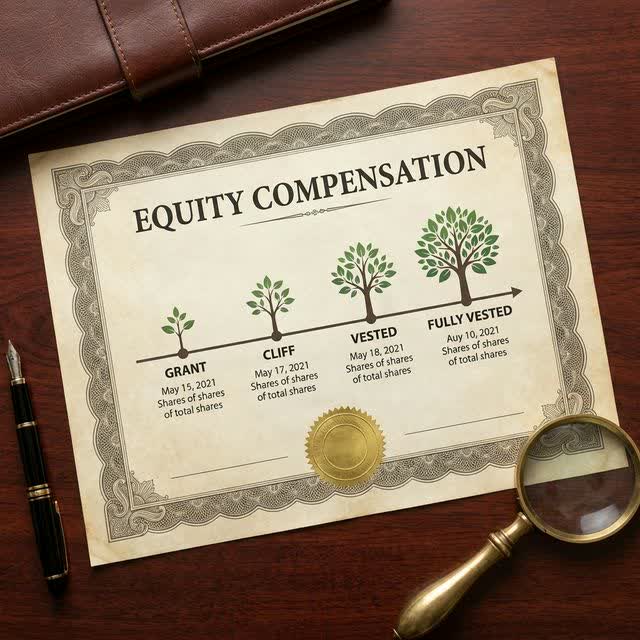
- Founders take vesting (4-year, 1-year cliff standard)
- Unvested shares are forfeitable upon departure
- 83(b) election lets founders pay taxes on current value
- Avoids higher taxes on appreciation later (if stock value rises)
- Filed within 30 days of grant (critical deadline)

Step 4: Board Formation
- Founders appoint initial board
- Hold first board meeting
- Record in minutes
- Typical initial board: 2-3 founders + advisors

Step 5: Obtain Licenses/Permits
- Business license (usually city/county)
- Professional licenses (if applicable)
- Industry-specific permits
- Cost: $50-500 depending on jurisdiction

Ongoing Compliance:

Annual:
- Annual report filing (state, usually $100-300)
- Franchise tax payment (state, if applicable)
- Board annual meeting (document in minutes)

As Needed:
- Bylaw amendments (rare, if changing governance)
- Stock option grants (document in board resolutions)
- Equity events (preferred stock issuances in fundraising)

Cost:
- Registered agent ($100-200/year, required for remote entities)
- Annual filing ($50-300)
- Legal advice (0-$2,000/year depending on events)
- Accounting ($1,000-3,000/year for startups, more as grow)
- Total annual: $1,500-5,000

Entity Conversion Risk:

If Founded as LLC, Later Convert to C Corp:

Tax Consequence:
- LLC deemed to have liquidated (taxable event)
- Assets valued at fair market value
- Founder liable for tax on appreciation
- Example: $100K LLC → $2M (Series A) → Convert
  Appreciation: $1.9M liable for tax on conversion

Avoidance:
- Form as C Corp from day 1 (eliminates conversion risk)
- Plan ahead: LLC acceptable only if 100% confident won't raise capital

Bottom Line:
- Choose C Corporation up front for venture-backed startups
- Avoid conversion headaches/tax
- Even bootstrapped startups often choose C Corp (future flexibility)
Conclusion
Entity selection is a critical startup decision with long-term tax and legal implications:
Key Takeaways:
- Default to C Corporation if considering venture capital
- Investor expectations (universal for Series A+)
- Preferred stock support (required for institutional rounds)
- Stock options/RSU support (necessary for talent)
- IPO ready (correct structure)
- LLC acceptable only if founder pre-decides against venture capital
- Benefits: Simplicity, pass-through taxation
- Drawbacks: Investor friction, conversion costs later
- Once fundraising planned: Convert immediately
- S Corporation election makes sense rarely
- Profitable consulting firms (self-employment tax savings)
- Never for venture-backed startups (incompatible with preferred stock)
- Possible later-stage if company very profitable
- Plan ahead to avoid conversion
- C Corporation from day 1 eliminates future complexity
- Conversion costs (legal, tax consequence) if done later
- Investor preference is C Corp (simplifies due diligence)
- Formation cost is low relative to total startup cost
- Difference between LLC and C Corp formation: ~$500
- Avoids potential $50-100K+ conversion costs later
- Obvious choice: C Corporation
Resources
- State filing: Secretary of State websites (all states)
- Legal counsel: Rocket Lawyer, Gust Equity, startup attorney
- Delaware incorporation: Incorporate Delaware, LegalZoom
- Compliance: Stripe Atlas (incorporation + setup), Carta (cap table)
- Tax planning: CPA specializing in startups
- 409A valuation: Appraisers specializing in early-stage
Related Articles
- Delaware vs Wyoming LLC: Which State Should You Incorporate In?
- SOC 1 vs SOC 2: What is the Difference for Startups? (2026)
- 409A Valuation: The Startup Founder’s Definitive Guide (2026)
- Venture Debt Explained: When and How Startups Should Use It
- Startup Equity 101: A Founder’s Guide to Stock Options and Vesting