Venture Capital Term Sheets: Complete Guide to Key Terms, Negotiation Tactics, and Founder Protection (2026)

schema: | { “@context”: “https://schema.org”, “@graph”: [ { “@type”: “Article”, “headline”: “Venture Capital Term Sheets: Complete Guide to Key Terms, Negotiation Tactics, and Founder Protection (2026)”, “description”: “Comprehensive guide to venture capital term sheets covering liquidation preferences, anti-dilution provisions, board rights, protective provisions, and negotiation strategies. Essential for Series A+ founders.”, “image”: “https://bato.com.np/assets/images/venture-capital-term-sheets.jpg”, “datePublished”: “2026-02-19”, “dateModified”: “2026-02-21”, “author”: { “@type”: “Person”, “name”: “Amanda Foster” }, “publisher”: { “@type”: “Organization”, “name”: “BATO - Business Audit & Tax Organization”, “logo”: { “@type”: “ImageObject”, “url”: “https://bato.com.np/assets/images/logo.png” } } }, { “@type”: “FAQPage”, “mainEntity”: [ { “@type”: “Question”, “name”: “What is a Venture Capital Term Sheet?”, “acceptedAnswer”: { “@type”: “Answer”, “text”: “A term sheet is a non-binding agreement that outlines the basic terms and conditions under which an investment will be made.” } }, { “@type”: “Question”, “name”: “Are term sheets legally binding?”, “acceptedAnswer”: { “@type”: “Answer”, “text”: “Generally, term sheets are non-binding, except for specific clauses like confidentiality and exclusivity.” } }, { “@type”: “Question”, “name”: “What are the key components of a term sheet?”, “acceptedAnswer”: { “@type”: “Answer”, “text”: “Key components include valuation, investment amount, liquidation preference, anti-dilution provisions, and board composition.” } } ] } ] }
The term sheet is the blueprint for your investor relationship. Understanding key terms and negotiation leverage is critical for protecting founder interests.
Understanding Term Sheet Fundamentals
Key Terms Explained
Liquidation Preferences (Valuation + Returns):
Definition: Priority order of cash distribution in exit event
Timing: Established at initial investment, affects future returns

1x Non-Participating Preferred (STANDARD):

What It Means:
- Investor gets their initial investment back first
- OR investors can participate in pro-rata share of remaining
- Investor chooses method, depending on outcome (mutually exclusive)
- "1x" = multiple of initial investment (1 times, not 2x or 3x)

Example Calculation - Company Acquisition for $10M:

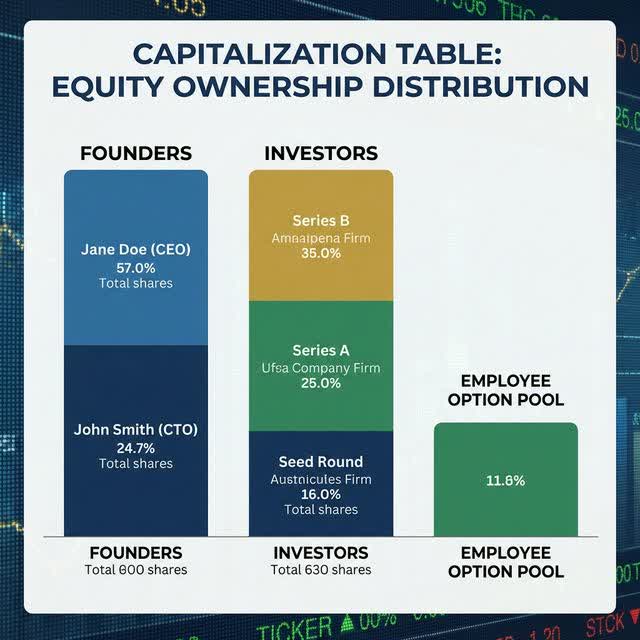
Cap Table at Exit:
- Common Stock (Founders): 5M shares = 50% ownership
- Preferred Stock Series A (Investor): 3M shares = 30%
- Preferred Stock Series B (New Investor): 2M shares = 20%
- Series A Cost Basis: $3M
- Series B Cost Basis: $2M

Waterfall with 1x Non-Participating:

Step 1: Pay off debt (assume 0)

Step 2: Series A gets 1x liquidation preference
- Receives: $3M (initial investment)
- Remaining for others: $7M

Step 3: Series B gets 1x liquidation preference
- Receives: $2M (initial investment)
- Remaining for others: $5M

Step 4: Common (founders/employees) gets rest
- Receives: $5M
- Post-tax: ~$3M (after capital gains tax at ~20%)

Comparison with Participating Preferred:

If Investor had "1x participating" (unfavorable for founders):
1. Investor gets 1x = $3M
2. Investor ALSO gets pro-rata participation in remaining $7M
   Investor's share: 30% × $7M = $2.1M additional
   Total investor gets: $3M + $2.1M = $5.1M
3. Remaining for founders: $4.9M
4. Post-tax: ~$3M

Comparison:
- 1x non-participating: Founders get $5M
- 1x participating: Founders get $4.9M
- Founder difference: $100K loss (1%)

Negotiation Leverage:
- Participating preferred more common in down rounds/difficult exits
- Non-participating standard in strong markets
- Founders should ALWAYS push for non-participating if possible
- Acceptable alternative: Participating with cap (e.g., 2x maximum return)

Investor Perspective on Preference:

Investor evaluates expected returns:

Strong Company Scenario ($50M exit):
- 1x non-participating still valuable (get $3M + $14M pro-rata = $7.1M, 4.7x return)
- Returns strong regardless of preference type

Weak Company Scenario ($5M exit):
- 1x non-participating: Investor gets full $5M (1.67x return)
- Founders get $0
- Preference protects investors in failed exits
- But: Weak returns anyway, investor loss more painful

Participating preferred ensures investor doesn't get diluted by later rounds,
but founders should resist unless investor adding major value/reducing risk.
Anti-Dilution Protection
How Anti-Dilution Works (Founder Perspective):
Anti-Dilution Definition:
Adjusts investor's share price downward if later rounds funded at lower dilution rates.
Protects investor from down rounds.
Comes at expense of founder dilution.

Weighted-Average Anti-Dilution (Most Common):

Mechanism: Reduces investor price IF subsequent round at lower price
Calculation: Weighted average of old and new price

Example:

Series A:
- Price: $2.00/share
- Shares issued: 1M
- Total invested: $2M

Series B (Down Round):
- Price: $1.50/share (25% down from Series A)
- Shares issued: 500K
- Total invested: $750K

Fully-Diluted Shares Before Series B: 6M common + 1M Series A = 7M
New calculation (weighted-average):

New Price = [Old Price × Old FD Shares + $ Raised] / New FD Shares
          = [$2.00 × 7M + $2M] / (7M + 500K)
          = $16M / 7.5M
          = $2.13/share

Adjustment:
- Series A investor originally owned: 1M shares @ $2.00
- Adjustment: Series A shares refactored at new price
- Effective: Series A gets extra shares (at no cost) as compensation
- Net shares: 1M × ($2.00 / $2.13) = 940K shares... wait no
- Actually: Series A maintains value, gets additional shares
- New basis: 1M × ($2.00 / $2.13) adjustment applied
- More simply: Series A protected from price drop via additional share issuance

Outcome:
- Series A price dampened (~2% adjustment in this case)
- Series A shares increased slightly
- Founders diluted slightly extra
- Series B founder new price: $1.50 (worse for existing shareholders)

Full Ratchet Anti-Dilution (FOUNDER-HOSTILE, RARE):

Same Scenario:

Full-Ratchet Definition:
- Any down round → investor's price deemed equal to new round price
- Extreme protection for investors
- Punitive to founders

Full Ratchet Example:
- Series A investor @ $2.00 deemed @ $1.50 (full drop)
- Series A effectively gets free stock (compensation for down round)
- Automatic adjustment, massive founder dilution

Calculation:
- Series A investor had 1M shares @ $2.00
- Now has: $2M / $1.50 = 1.33M shares @ $1.50
- Extra shares: 330K (at no cost to investor)
- Founder dilution: Massive (founders go from 70% to ~65%)

Why Founder Should Avoid:

Full ratchet almost always worse than weighted-average or no anti-dilution.
Investor protection so extreme founders pay huge price for down round.
Weighted-average compromise standard.

Negotiation Strategy:
- Resist anti-dilution entirely if possible (strong company)
- Accept weighted-average if investor insists
- NEVER accept full ratchet (fight hard, walk if needed)
- Consider cap: Anti-dilution limited to 0.5x original (no further)

Cap on Anti-Dilution:

Compromise Structure:
- Anti-dilution applies only in down rounds (not all subsequent)
- Maximum adjustment: Price can't fall below 0.5x original (example)
- Time limit: Anti-dilution expires after 3 years
- Creates fairness: Investor protected, but founder protected from unlimited dilution

Example (Capped Anti-Dilution):
- Series A: $2.00
- Series B: $1.00 (50% down)
- Anti-dilution applies
- But capped: Investor price can't go below 0.5x = $1.00
- Result: $1.00 new price (not further adjusted)
- Investor diluted but not excessively
Protective Provisions and Board Control
Investor Rights Package
What Investors Expect (Standard Terms):
1. Board Seat

Definition: Investor appoints one director to company board

Typical Structure (Series A):
- Total board: 3-5 directors
- Founders: 1-2 seats
- Investor(s): 1 seat
- Independent/neutral: 1-2 seats

Implications:
- Investor active in governance
- Observer rights even if no full seat
- Can veto major decisions (see protective provisions)
- Quarterly board meetings common

Negotiation Points:
✓ Founder: Push for board majority (avoid investor veto)
  Series A often: 3-person board (1 founder, 1 investor, 1 neutral)

✗ Investor: Wants veto power on major decisions
  Protective provisions give veto even without board majority

Compromise:
- Single investor: Standard to get 1 of 3-5 board seats
- Multiple investors: Each investor wants seat
  → At Series A+: Board expands (becomes 5-7 members)
  → Later stage: Board becomes 11-13 directors

2. Protective Provisions (Negative Covenants)

Definition: Investor veto power on major corporate actions

Typical Investor Vetoes:
✗ Cannot buy, sell, or liquidate company
✗ Cannot issue new shares (beyond option pool)
✗ Cannot amend certificate of incorporation
✗ Cannot change board size
✗ Cannot relate party transactions
✗ Cannot declare dividend or pay indebtedness
✗ Cannot modify investor rights

Example Scenario (Investor Frustration):
- Series A investor owns 25%
- Founders want to distribute profit/dividend to founders
- Investor can veto (protective provision prevents this)
- Investor blocked from unexpected distributions

Founder Perspective:
- Protective provisions limit operational flexibility
- Prevents major decisions without investor consent
- Investor protection comes at founder expense

Negotiation Strategy:
- Resist over-broad protective provisions
- Carve-outs: Hiring within planned headcount OK (not covered)
- Materiality threshold: Only for $X+ transactions
- Removal: After Series B, certain provisions can sunset

3. Information Rights

Definition: Investor access to financial information, updates

Standard Rights:
- Quarterly financial statements (within 45 days of close)
- Annual audited financials (within 90 days)
- Annual budget forecast
- Cap table (updated annually)
- Board meetings (invited to attend)

Founder Perspective:
- Reasonable information sharing expected
- Burden: Finance team produces reports quarterly
- But: Should be done anyway (good business practice)

Cost:
- FTE time: 10-20 hours/quarter = ~$2,500-5,000 cost
- External audit: $3,000-10,000/year (increasingly expected at Series A+)

4. Pro-Rata Rights (Participation Rights)

Definition: Investor can participate in future fundraising rounds

Mechanics:
- Series A investor can invest up to their pro-rata share in Series B+
- Maintains ownership percentage (if elected)
- First right to invest (before outside investors)

Example:
- Series A investor: $2M, owns 25% (post-money)
- Series B raise: $5M
- Investor pro-rata share: 25% × $5M = $1.25M
- Investor can invest $1.25M (maintains 25% ownership)
- If investor doesn't invest: Diluted to ~18% (25% × $6M / $7M)

Founder Perspective:
- Pro-rata rights expected (reasonable investor term)
- Better for founder than investor buying shares without participation (can increase ownership %  arbitrarily)
- Prevents investor from dominating future rounds

Bottom Line: Founders accept pro-rata rights as standard

5. Anti-Dilution (Covered Previously)

Full details in prior section on anti-dilution protection.

6. Drag-Along Rights

Definition: Investor can force minority shareholders to sell in acquisition

Mechanics:
- If majority (50%+) agree to sell
- Minority shareholders must sell on same terms
- Prevents holdup by founders refusing to sell

Example:
- Series A investor: 30% ownership
- Founder: 40% ownership
- Series B investor: 30% ownership
- Acquirer offers $100M for company
- Series B investor urges acceptance
- Series A investor + Series B investor = 60% approve
- Founder (40%) can be dragged along (forced to sell)
- Terms: All shareholders get same per-share amount
- Founder cannot veto acquisition

Founder Perspective:
- Necessary for investor protection (can't be vetoed by founder)
- Reasonable term (more equity investors, more need for drag-along)
- Typically in Series B+ (not all Series A term sheets)

Negotiation:
- Resist if possible (founder control of exit important)
- Accept if necessary for investor participation
- Reciprocal drag-along: Series A investor also can be dragged (fair)

7. Tag-Along Rights (Rare in Initial Rounds)

Definition: Founder can force investor to sell if founder sells

Mechanics:
- If founder sells shares
- Other shareholders can tag along (sell on same terms)
- Prevents founder from cherry-picking exit

Founder Perspective:
- Generally positive (enables founder exit without dragging everyone)
- Limits founder's ability to negotiate separate side deal
- Usually founders push for this

8. Redemption Rights (Rare Early Stage)

Definition: Investor can force founder to repurchase shares

Mechanics:
- After holding period (e.g., 5 years)
- Investor can force founder to buy back shares at formula price
- Effectively gives investor an out if no exit occurs

Founder Perspective:
- Generally negative (forces cash outlay)
- More common in later-stage or down rounds
- Founders should resist in Series A (signal of investor concern)
Negotiation Strategies and Tactics
Leverage and Bargaining Power
Building Founder Strength in Negotiations:
Sources of Founder Leverage:

1. Competitive Process (Most Important)

Definition: Multiple investors interested in investing
Impact on Negotiation:
- Investors compete to offer better terms
- Founders choose best terms/partner
- Creates tension: Lower valuation vs. better terms
- Investor 1 might offer $15M @ better terms vs. $20M @ tough terms

How to Build Competitive Process:
✓ Research investors (identify 30+ potentials)
✓ Extensive warm introductions (from advisors, board members)
✓ Pitch to multiple investors simultaneously (wave approach)
✓ Share positive signals (e.g., "3 investors interested")
✓ Don't accept first term sheet immediately
✓ Use language: "We're in conversation with multiple investors"

Real Negotiating Power:
- With one term sheet: Investor has all leverage
- With three term sheets: Founders have leverage
- Investor 1: "These are our terms, take it or leave"
- Founder response (weak lever): "I'm not sure..."
- Founder response (strong lever): "Other investors offering better terms"

2. Business Metrics/Traction

Strong Metrics:
- Revenue: Higher ARR = better terms
- Growth: Faster growth = better valuation
- Customers: More customers reduces perceived risk
- Team: Experienced team reduces risk

Weak Metrics:
- Pre-revenue: Limited negotiation power
- Slow growth: <10% month-over-month
- Few customers: All eggs in one basket
- First-time founders: Risk premium applied

Strategy:
- Delay fundraising if metrics weak (build more traction)
- Example: Raise at $200K ARR vs. raise at $500K ARR
  $200K pre-revenue: Maybe $5M valuation
  $500K ARR: Maybe $15M valuation
  Waiting 6 months could increase valuation $10M+ (worth delay)

3. Strategic Alternatives

Definition: Other paths founder can pursue besides venture capital
Examples:
- Venture debt ($500K-$2M, doesn't dilute)
- Grants/non-dilutive funding ($100-500K)
- Strategic partnerships/customer prepayments
- Slower organic growth (bootstrap approach)
- Acquisition offer (if received)

How It Works:
- Founder to investor: "We could raise venture debt + grants instead"
- Investor hears: "Founder can succeed without us"
- Increases founder credibility
- Investor more willing to negotiate better terms

Practical Example:
- Founder raises $500K venture debt + $250K in grants
- $750K runway extended
- Can be more selective on Series A when ready
- Better terms negotiated 12 months later

4. Founder Conviction

Definition: Confidence that company will succeed regardless
Signals:
- Founder willing to walk from bad deal
- Not desperate for capital (can wait)
- Founder reinvesting in company (skin in game)
- Founder has achieved major milestones

How It Works:
- Weak signal: "We need capital to grow"
- Strong signal: "Capital accelerates proven model"
- Investor senses desperation vs. confidence
- Negotiates harder with desperate founders

Building Conviction Signal:
✓ Demonstrate founder commitment (investing own money)
✓ Show customer validation (strong retention)
✓ Hit public milestones (market awareness)
✓ Have board supporters (credible advisors backing)

Negotiation Tactics:

Proactive Moves:

1. Get Multiple Term Sheets
   Strategy: Identify all investor options, pitch broadly
   Timing: 2-3 months of pitching
   Result: Multiple term sheets by month 2-3
   Impact: Immediate negotiation leverage

2. Keep Process Moving
   - Quick response times to investor requests
   - Move to next investor if one stalls
   - Don't wait on one investor to decide
   - Signal: Looking, but moving forward with or without them

3. Respond with Counter-Offer
   - Never accept first term sheet as-is
   - Always negotiate some terms
   - Shows investor founder knows value
   - Small things: Board composition, protective provisions, preference

4. Separate Issues
   - If investor firm on valuation: Negotiate other terms
   - Example: "Accept $20M valuation, but remove anti-dilution"
   - Trade-offs better than pure acceptance/rejection

5. Know Your Walk-Away Point
   - Establish minimum acceptable terms pre-negotiation
   - Walk away from poor terms (better than bad capital)
   - Example: "Won't accept participating preferred, 1x non-participating minimum"
   - Credible walk threat increases negotiation leverage

Reactive Moves (If Investor Pushes):

1. "We Need to Think About It"
   - Don't accept immediately
   - Take 1-2 weeks to consider
   - Signal: Not desperate, considering all options

2. "Other Investors Offered..."
   - Reference competing term sheets (if exist)
   - By name or anonymously if needed
   - Examples: "Similar investor offered 1x non-participating"
             "Another firm offered weighted-average anti-dilution"

3. Request Changes That Improve Terms
   - Ask for lower liquidation preference
   - Request removing anti-dilution
   - Push for cleaner protective provisions
   - Even if denied, shows founder won't accept first offer

4. Bring Advisor/Counsel to Negotiations
   - Shows founder taking seriously
   - Counsel can be harder negotiator (vs. founder)
   - Counsel creates professional distance
   - Investor takes founder and terms more seriously

Outcome of Strong Negotiation:

Well-Negotiated Series A Terms:
- 1x non-participating preferred
- Weighted-average anti-dilution (not full ratchet)
- Limited protective provisions (carve outs for operations)
- Information rights (reasonable quarterly reporting)
- Founder-friendly board (3 or 5 with founder control)
- Pro-rata rights (standard, acceptable)
- Low liquidation multiple (founder doesn't need 1x, 0.75x acceptable)

Poorly-Negotiated Terms (Founder Mistake):
- 2x participating preferred (investor clears huge return before founders)
- Full-ratchet anti-dilution (founder gets crushed in down round)
- Extensive protective provisions (investor veto on everything)
- Redemption rights (investor can force buyback)
- Investor controlled board (investor dominates decisions)
- Excessive information rights (expensive reporting, proprietary data shared)
- Other onerous terms (specific to deal)
Closing and Post-Close
From Term Sheet to Close
Executing the Deal:
Timeline: Term Sheet to Close

Day 1: Term Sheet Signed
- Non-binding (except confidentiality/exclusivity)
- Exclusivity: Founder commits to deal with this investor for 30-45 days
- Confidentiality: Terms not shared with other investors

Days 1-30: Legal Documentation

Lawyer Work:
- Investor lawyers prepare documentation
- Preferred stock agreement (defines investor rights)
- Shareholder agreement (between investor and founders)
- Board resolutions (document grants, board appointments)
- Amended and restated certificate (new preferred class)
- Stock purchase agreement (investor purchase mechanics)

Cost:
- Company counsel: $5,000-15,000 (negotiation, review)
- Investor counsel: $3,000-10,000 (paid by investor typically)
- Total legal cost: $8,000-25,000

Founder Actions During Close:
- Legal review of documents (via counsel)
- Negotiation of specific language (minor points)
- Execution of documents (signature required)
- Due diligence responsiveness (more questions)

Days 15-45: Diligence and Documentation

Investor Due Diligence:
- Background checks (on founders)
- Reference calls (customers, advisors)
- Technical audit (product/engineering)
- IP verification (founders own technology)
- Customer contracts (verify revenue)
- Cap table review (for accuracy)
- Financial audit (revenue claimed is real)

Founder Task: Provide documentation
- Company policies
- Employee agreements
- Board minutes
- Cap table
- Customer contracts
- Financials
- References

Common Stumbling Blocks:
- Equity disputes (founder claimed revenue he didn't own)
- IP ownership (prior employer claims ownership)
- Customer concentration (one large customer might leave)
- Key customer contracts (expiring soon)
- Regulatory issues (licensing missing)

Days 30-45: Final Negotiations and Closing

Final Adjustments:
- Documents reviewed by both parties
- Minor term adjustments (edge case language)
- Conditions to close verified:
  * 409A valuation completed
  * Cap table clean
  * Employee agreements in place
  * Board resolutions executed
  * No material adverse changes

Closing:
- Final signatures (documents executed)
- Wire transfer (investor sends funds)
- Board seat appointment (investor director joins)
- Preferred stock issued (new class created)
- Company bank account deposit (capital received)

Post-Closing Tasks:
- Update cap table (new investor added)
- File amended certificate (new preferred stock class)
- Announce to team (investor arriving, plan for scaling)
- Update investors (other board members notified)
- Monthly accounting (board materials prepared)

First Board Meeting:
- Investor director appointed
- Review financing use of funds plan
- Approve quarterly reporting schedule
- Strategic discussion (product, market, hiring)
- Monthly narrative (financial results, challenges)
Conclusion
Understanding term sheets is essential for founders navigating venture capital. Key points:
- Know the Terms - Understand liquidation preferences, anti-dilution, protective provisions
- Build Negotiation Leverage - Multiple investors, strong metrics, strategic alternatives
- Prioritize Key Issues - Valuation matters, but terms matter more
- Get Good Counsel - Legal advisor pays for itself in better terms
- Negotiate Firmly - Always counter-offer, never accept first terms
- Understand Trade-offs - Higher valuation may require worse terms (or vice versa)
- Document Everything - Term sheets lead to binding documents, clarity essential
Resources
- Term Sheet Resources: NVCA Model Documents, Y Combinator guide
- Legal Counsel: Startup attorneys, legal tech (Rocket Lawyer, Gust)
- Education: Founder networks, pitch competitions, investor relations firms
- Templates: SAFE agreements (simple docs), standard term sheets
Related Articles
- Series A Term Sheet Negotiation: Key Clauses Founders Must Understand
- Series A Fundraising: Complete Guide to Venture Capital Financing, Due Diligence, and Investment Terms (2026)
- Private Equity vs Venture Capital: How They Actually Differ
- 409A Valuation: The Startup Founder’s Definitive Guide (2026)