Venture Debt Explained: When and How Startups Should Use It

When a high-growth startup’s equity runway starts to compress, the board faces a binary choice: raise another dilutive equity round or find an alternative. This is where venture debt has become an increasingly attractive tool for sophisticated founders who understand its nuances.
Venture debt is not a substitute for equity—it is a precision instrument. Used correctly, it buys growth runway without surrendering significant ownership. Used carelessly, it can trigger a covenant default that accelerates a company toward insolvency. This guide covers everything you need to know before signing a venture loan agreement.
What is Venture Debt?
At its core, venture debt is a loan facility made available to startups that are backed by institutional venture capital investors. Traditional commercial banks require profitability and hard collateral (equipment, real estate) before extending credit. Venture debt lenders waive these requirements, treating the startup’s VC backing, strong ARR growth, and clear path to the next round as their primary collateral.
In exchange for accepting this higher risk, venture debt lenders charge an above-market interest rate (typically 8%–14%) and receive warrants—small equity stakes that allow them to purchase shares at a fixed price, providing upside if the company succeeds.
The Three Legitimate Uses of Venture Debt
Not every startup needs venture debt. Before approaching a lender, confirm you are using it for one of the following strategic purposes:
1. Runway Extension Between Rounds
The classic use case. If you just closed a $10M Series A with 18 months of runway and want to reach 24–30 months before raising your Series B, a $3M debt facility can bridge the gap, giving your team time to hit the key metrics that will justify a higher valuation at the next round.
2. Capital Expenditure Financing
If your business requires physical infrastructure—manufacturing equipment, specialized hardware, data center capacity—venture debt is often a superior alternative to equity because the assets being financed serve as secondary collateral, reducing the lender’s risk and your interest rate.
3. Acquisition Bridge
If a strategic acquisition opportunity arises between rounds, a venture debt facility can provide the capital to close the deal quickly without needing to run a full equity round process (which typically takes 4–6 months via venture capital term sheet negotiations).
Critical Terms to Negotiate
Warrants
Warrants are the “equity kicker” that compensates the lender for taking on risk. They are typically expressed as a percentage of the loan: a $3M loan at 5% warrant coverage means the lender receives warrants valued at $150,000 at the current share price. Negotiate aggressively to keep warrant coverage below 3%.
Covenants
Financial covenants are quantitative thresholds the startup must maintain throughout the loan term (e.g., “Maintain at least $2M in cash at all times” or “ARR must not decline more than 15% quarter-over-quarter”). A covenant breach triggers a default, giving the lender the right to accelerate the loan. Ensure covenants in the term sheet are comfortable and achievable even in a downside scenario.
Material Adverse Change (MAC) Clause
A MAC clause gives the lender the right to accelerate the loan if there is a “material adverse change” in the startup’s business. Negotiate to exclude ordinary business fluctuations (customer churn, temporary revenue dips) from the definition.
Impact on Cap Table and Financials
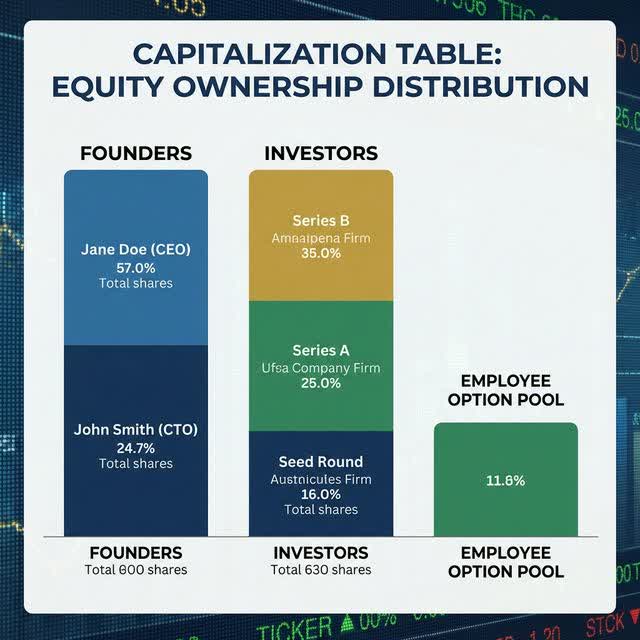
Because warrants are included in venture debt deals, they appear on your cap table as a small equity position. The total dilution is almost always less than 1%—far less than issuing a new equity round, which typically dilutes existing shareholders by 15%–25%.
From a financial reporting perspective, the debt principal appears on the balance sheet as a liability. Interest expense flows monthly through the income statement. Understanding this treatment ensures your financial statements accurately reflect the obligation before your next Series B audit.
Conclusion
Venture debt is one of the most misunderstood financial instruments available to startup founders. When deployed strategically after a successful equity round with strong VC backing, it is a powerful dilution-minimizing tool. When deployed out of desperation to avoid a difficult equity conversation, it can be the catalyst for a company’s demise. Treat it like any other term in your financing stack: understand the downside first.
Related Articles
- Delaware vs Wyoming LLC: Which State Should You Incorporate In?
- SOC 1 vs SOC 2: What is the Difference for Startups? (2026)
- SOC 2 Compliance Guide for Startups: A Vendor-Neutral Checklist (2026)
- Private Equity vs Venture Capital: How They Actually Differ
- Entity Selection for Startups: LLC vs. C Corporation vs. S Corporation Tax and Legal Guide (2026)
Frequently Asked Questions (FAQ)
What is venture debt? Venture debt is a type of loan specifically designed for venture-backed startups. Unlike traditional bank loans, venture debt lenders do not require hard collateral or profitability; instead, they rely on the startup’s VC backing and growth trajectory as implicit collateral.
When should a startup use venture debt? Venture debt is most powerful when used strategically to extend runway between equity rounds (a ‘bridge’), to finance a defined capital expenditure (e.g., equipment or infrastructure), or to avoid dilution when a startup is close to a strong revenue milestone that will command a higher valuation.
What are warrants in a venture debt deal? Warrants are small equity stakes—typically 1% to 5% of the loan value—that venture debt lenders receive as compensation for taking on the higher risk of lending to an unprofitable startup. They give the lender the right to purchase shares at a fixed price, usually the most recent round’s price.
What is the difference between venture debt and a convertible note? A convertible note is short-term debt designed explicitly to convert into equity at the next financing round. Venture debt is longer-term debt (36 to 48 months) that is intended to be repaid in cash with regular interest payments, not converted into equity.
What are the typical terms of a venture debt facility? Typical venture debt terms include a loan amount of 25% to 35% of the most recent equity raise, an interest rate of 8% to 14% per annum, a loan term of 36 to 48 months, an interest-only period of 6 to 12 months, plus warrants covering 1% to 5% of the loan amount.
Who are the main venture debt lenders? The main players in venture debt are Silicon Valley Bank (now a division of First Citizens Bank), Western Technology Investment (WTI), Hercules Capital, and Trinity Capital. Many traditional banks also have dedicated venture banking divisions.
What are the risks of venture debt for a startup? The primary risk is that unlike equity, debt must be repaid regardless of your startup’s performance. If the business misses revenue targets and cannot raise another round, the lender can accelerate the loan and trigger a default, potentially forcing insolvency.
Does taking venture debt affect my cap table? Yes, but minimally. The warrants attached to a venture debt deal will appear on your cap table, typically representing less than 1% dilution. This is far less dilutive than issuing a new equity round, which is precisely why debt is appealing to founders wanting to preserve ownership.
Can a startup use venture debt without a VC lead? Very rarely. Most venture debt lenders require a startup to have at least one institutional VC investor on the cap table as a prerequisite for lending. The VC’s continued support and ability to lead a bridge round if needed is what makes the loan viable from the lender’s risk perspective.
Is venture debt included in accounting as a liability? Yes. Venture debt is recorded as a long-term or short-term liability on the balance sheet depending on the repayment schedule. Interest expense flows through the income statement, and warrant value is recorded in equity. An auditor will carefully scrutinize the debt covenants and compliance.