The First 90 Days: A Complete Finance & Accounting Checklist for Seed-Stage Startups
The Stakes: Why the First 90 Days Decide the Next Three Years
Every painful finance cleanup — the pre-Series A scramble, the 409A restatement, the payroll nexus penalties — traces back to shortcuts taken in the first quarter after incorporation. Money just landed, the team is hiring, and accounting feels like overhead. It is actually foundation: the controls, accounts, and registrations you set now compound into either clean audits or expensive remediation. This checklist runs in order. Do not skip ahead.
Pair with How to Start an LLC, LLC vs C-Corp, Bookkeeping Best Practices, and How to Hire a Controller.
Days 1–7: Separate Everything
Open business banking before a single dollar moves. Delaware C-Corp standard setup:
| Account | Purpose | Minimum balance discipline |
|---|---|---|
| Operating | All revenue in, all vendor spend out | Daily review; no personal transactions, ever |
| Payroll clearing | Net pay + tax deposits only; must zero monthly | Zero it or investigate — never carry balances |
| Tax reserve | Estimated taxes, sales-tax nexus liabilities | Fund quarterly estimates on receipt of income |
Choose the bank on feeds and controls, not APY — native QuickBooks/Xero sync, positive pay, ACH filters, and dual approval matter more than 50 basis points. See Best Business Bank Accounts for the full comparison.
The no-commingling rule is absolute. Paying a vendor from a personal card “just this once” creates three problems: pierced-veil exposure if ever litigated, an unreconciled personal/business split the bookkeeper must untangle monthly, and diligence questions at every fundraise. Founders who put personal money in: document it as a loan or capital contribution with a board minute the same day — see Operating Agreement formalities and Record Retention.
Get the EIN and state IDs in the same week — EIN first (it unlocks everything), then withholding and unemployment registrations in every work state, then business licenses. Details: How to Get an EIN and Foreign Qualification.
Days 8–30: Build the Machine
Freeze the chart of accounts. 80–150 natural accounts, departments as dimensions (never as accounts), payroll clearing and intercompany accounts that must zero monthly, and a mapping of each account to its tax line. Every transaction from day one lands in the right bucket or the year-end provision becomes archaeology — see Chart of Accounts and Bookkeeping Software.
Stand up payroll properly — Gusto vs Rippling:
| Situation | Pick | Why |
|---|---|---|
| US-only, under ~30 people, simple benefits | Gusto | Fastest setup, lowest cost, handles multi-state withholding cleanly |
| Global contractors, EOR needs, or IT device management bundled | Rippling | One system for HR + international payroll + IT; overkill below ~10 people |
| Either way | Non-negotiable | W-9s collected before first payment; work-location tracked per pay period; payroll calendar published |
A wrong pick costs a painful migration later, but no pick costs penalties now — the first multi-state hire without registration triggers withholding failure from day one. See Payroll Tax Guide, Multi-State Nexus, and 1099 vs W-2.
Lock the monthly close on day 30, even if the books are nearly empty. Bank recs, AR/AP aging (even if zero), payroll tie-out, locked periods with a password only the founder-finance lead knows. The discipline matters more than the numbers — a locked empty close in month one becomes a locked real close in month twelve. See Month-End Close and Bank Reconciliation.
Days 31–60: Controls Before Scale
- Separate financial duties now, while the team is small enough to design cleanly: whoever enters vendors cannot approve payments; whoever runs payroll cannot approve headcount changes. Two people and a written matrix beats five people with implicit trust — see Financial Control Framework and AP Fraud Checklist.
- Set the equity foundation: finalize the option plan, get the first 409A valuation, and calendar every 83(b) election with a 30-day countdown from each grant — the most expensive missed deadline in startup tax.
- Sales-tax nexus review: before the first dollar of revenue in a new state or SaaS taxability question, map nexus and register where triggered — see SaaS Sales Tax and Sales Tax Automation.
Days 61–90: Prove It Works
- Run a full close with review signatures — preparer, reviewer, dates — and file the binder. If it takes more than five days, fix the bottleneck now, not at Series A diligence.
- Reconcile everything to everything: bank to GL, payroll register to returns, cap table to equity accounts. Unreconciled items at day 90 become audit adjustments at month 18.
- File and calendar: BOI tracking current — see BOI Reporting — Delaware franchise obligations calendared — see Delaware Franchise Tax — and Q1 estimates modeled — see Estimated Taxes.
- Write the one-page finance manual: close calendar, approval thresholds, reimbursement policy, and who owns what. Future hires inherit discipline instead of inventing process.
The Five Most Expensive First-90-Day Mistakes
| Mistake | What it costs later |
|---|---|
| Paying contractors without W-9s | January scramble, backup-withholding exposure, and penalties per missing form — see Filing Deadlines |
| Hiring remotely without registering | Retroactive withholding liability, penalties, and interest in every missed state — blocked only by pre-hire checks |
| Skipping 83(b) filings | Founders taxed on millions at vesting instead of hundreds at grant, plus a QSBS clock that starts years late |
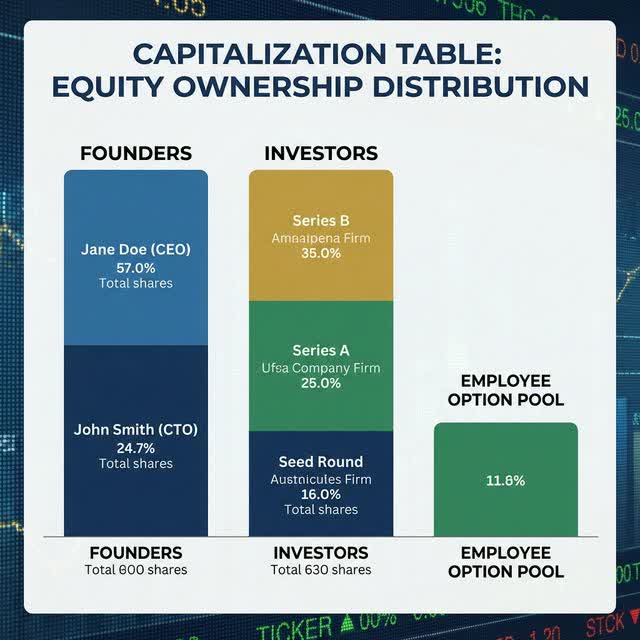
| No cap-table discipline | handshake equity, undocumented SAFEs, and option grants without board approval — each a diligence finding priced into the round, see SAFE Accounting |
| Mixing funds “temporarily” | Veil-piercing exposure plus a bookkeeping knot that costs more CPA hours to untangle than the company saved in week one |
Every row shares a root cause: treating finance as something to install later. Installation later means reconstruction, and reconstruction is billed by the hour — by CPAs, lawyers, and payroll providers simultaneously.
The Starter Stack (What to Buy, in Order)
Founders overspend on tools and underspend on discipline. Buy in this sequence, stop when the need is met:
- Accounting with bank feeds and locks (QuickBooks or Xero) — day one, non-negotiable. Receipt capture via phone app from the first expense.
- Payroll provider (Gusto or Rippling per the table above) — before the first hire, not after the first payroll error.
- Expense management once cards exceed five holders — receipt-at-swipe beats month-end archaeology; see Expense Management.
- Cap-table software (Carta, Pulley, or equivalent) before the first priced round or option grant — spreadsheets fail diligence exactly when accuracy matters most.
- Close checklist in a shared doc — free, and worth more than items 1–4 combined if actually followed. Templates beat tools: a $0 checklist executed monthly outperforms a $30k ERP nobody closes in.
Total software cost for the 90 days: typically $200–$600/month. Total cost of skipping any of it: measured in CPA cleanup bills and delayed financings.
FAQ
Should we hire a bookkeeper in the first 90 days?
A part-time bookkeeper plus founder oversight beats founder DIY within the first month of real transaction volume. The test from Bookkeeping Best Practices: if recs slip a full cycle, you waited too long.
Do we need accounting software on day one?
Yes — feeds, audit trails, and period locks from the first transaction. Migrating a year of spreadsheets later costs more than the subscription ever will.
Next Steps
- This week: separate accounts, EIN, state registrations, and the no-commingling rule in writing.
- This month: chart of accounts, payroll provider, first locked close, equity and 83(b) calendar.
- This quarter: SoD matrix, nexus review, full signed close, and the one-page finance manual.