Term Loan vs Line of Credit vs Venture Debt in 2026: Cost, Covenants, and When Each Wins
Head-to-Head
| Facility | Best for | Cost signal | Risk |
|---|---|---|---|
| Term loan | Equipment, expansion | Fixed amortizing | Collateral + covenants |
| Line / revolver | Seasonal WC | Pay on use + fees | Clean-up + borrowing base |
| Venture debt | Extend runway to milestone | IO + warrants | Tight covenants, MAC |
Pair with Venture Debt, Working Capital, Cash-Flow, and Going Concern.
Covenant Math to Model
- DSCR, quick ratio, minimum cash, ARR growth.
- Sensitivity: -10% revenue, +200bps rates.
- Headroom report monthly in Month-End Close — see Bank Rec.
Link forecasts to FP&A Software discipline and Treasury.
Diligence Packet Lenders Want
- 24-month forecast, AR aging — see Collections — AP aging, debt schedule, contracts.
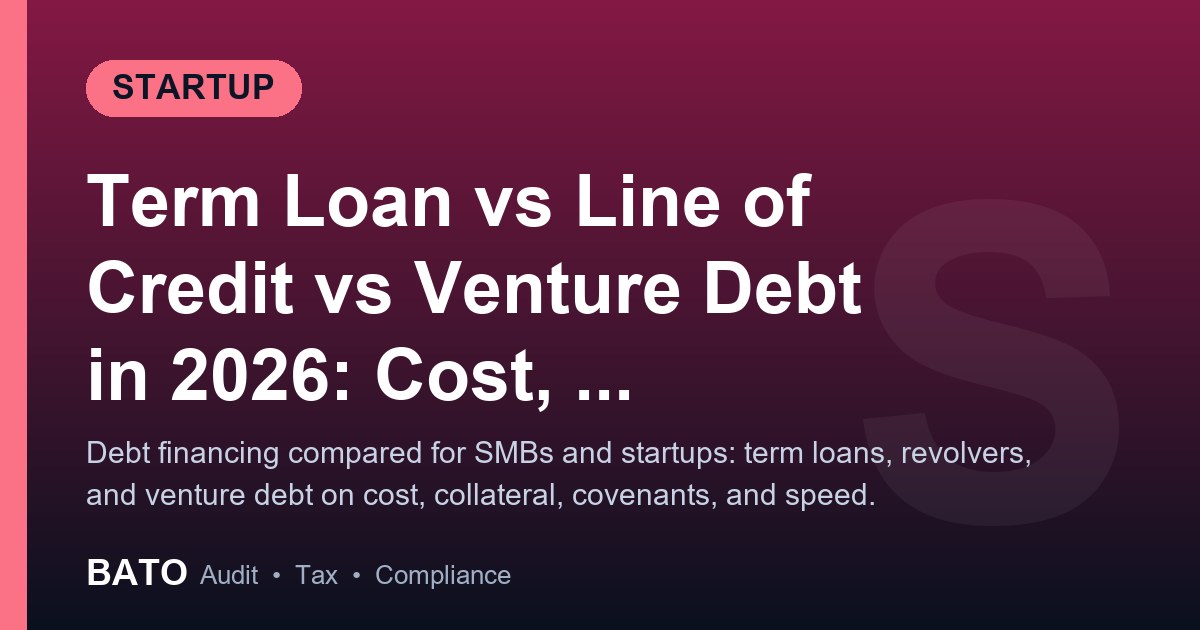
- Cap table — see Cap Table — and board minutes.
- Audit-ready tie-outs per Q1 Prep.
All-In Cost Comparison (Worked)
$1m facility, 3-year horizon:
| Cost | Term loan 8% amortizing | Revolver (avg 50% drawn, prime+2%, 0.5% unused) | Venture debt $1m, 12% IO + 5% warrant coverage |
|---|---|---|---|
| Interest/fees paid | ~$128k | ~$95k | ~$360k interest + warrant dilution |
| Flexibility | None — fixed schedule | Draw/repay freely | IO period then amortization |
| True cost driver | Rate | Utilization + unused fees | Warrants (often 1–3% of company at exit value) |
The revolver looks cheapest only at 50% utilization — at 90% drawn it exceeds the term loan, and at 10% drawn the unused fee dominates. Model your actual draw pattern from the Cash Forecast, not the headline rate. Venture debt’s warrants routinely cost more than the interest at a successful exit — price them at your expected valuation, not zero.
Covenant Negotiation Points (Before Signing)
- Equity cure rights: can investors inject cash to cure a breach? How many times, and does cured quarter count for trailing tests?
- Covenant holidays: 1–2 quarters of relief post-close while integration or growth investments land — see Post-Merger.
- MAC clause scope: narrow to payment default and insolvency events; broad MAC (“material adverse change” undefined) lets lenders re-underwrite at will.
- Reporting burden: monthly vs quarterly compliance certificates, audit deadlines, and field-exam rights — calendar all into Month-End Close.
- Warrant coverage and success fees (venture debt): negotiate coverage percentage, valuation cap methodology, and whether success fees trigger on M&A only or any exit.
Have counsel redline covenants alongside economics — founders negotiate rate and ignore covenants, then breach the part they didn’t read.
When Each Wins (Decision Rules)
- Term loan: asset with 5+ year life, predictable cash flow, DSCR >1.5× through downside. Equipment, buildouts, acquisitions.
- Revolver: seasonal or lumpy working capital, DSO-driven gaps (see Collections), clean-up achievable annually (lenders require periodic zero balances to prove it’s working capital, not permanent debt).
- Venture debt: 12+ months cash post-draw, credible milestone within the IO period that unlocks the next round at higher valuation, covenants you can meet in the downside case — not just base case.
- None of the above: under 6 months runway with missed targets — debt accelerates failure. Cut burn or raise equity first — see Burn/Runway and Going Concern.
FAQ
Should startups take venture debt pre-profit?
Only with 12+ months cash post-debt and credible path to milestones. Otherwise bridge equity or cut burn.
What fees hide true cost?
Origination, unused, warrants, success fees, and legal. Build all-in IRR before signing.
Next Steps
- Model service under downside before term sheets.
- Negotiate covenants and cure rights with counsel.
- Calendar compliance certificates into close.