SAFE vs Convertible Notes: Startup Accounting Under ASC 480 and ASC 815
Why This Matters in 2026
Misclassified SAFEs cause restatements at Series A diligence and 409A conflicts.
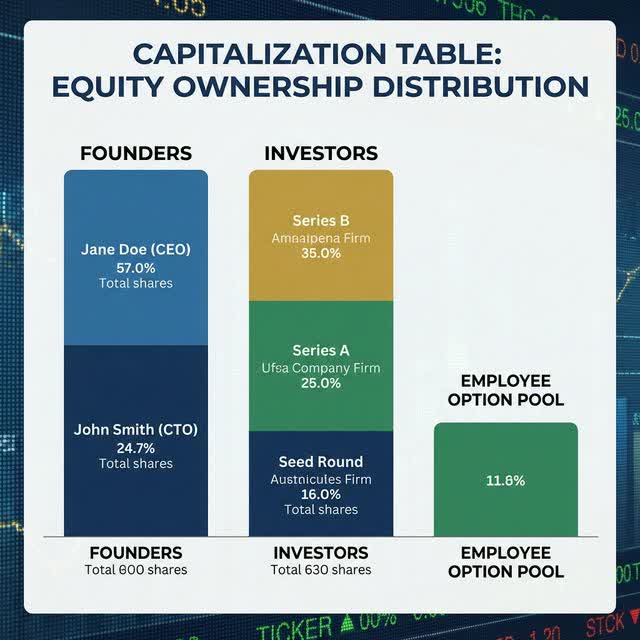
Pair with Series A, Cap Table, Term Sheets, and Financial Statement Analysis.
Decision Tree
| Instrument | Likely treatment |
|---|---|
| SAFE, valuation cap, no maturity | Liability at fair value, remeasure |
| SAFE, MFN only | Liability, remeasure on trigger |
| Convertible note, fixed conversion | Debt + BCF assessment |
| Convertible note, variable / down-round | Debt + bifurcated derivative |
Document ASC 480 → ASC 815 → ASC 820 sequence in memo; tie to IFRS if dual-reporting.
Measurement Checklist
- Cap, discount, MFN, pro-rata rights extracted to schedule.
- Valuation: OPM/backsolve, volatility, time to exit, scenario weights.
- Interest and discount amortization tied to GL — see Month-End Close.
- Conversion on qualified financing recalculated and approved.
- Disclosure: terms, fair-value levels, dilution risk.
Retain per Audit Procedures and Q1 Prep.
Common Errors
- Booking SAFEs to equity on receipt.
- Freezing fair value until conversion.
- Missing side-letter MFN that changes settlement.
- Mixing 409A common value with SAFE preferred economics.
Link controls to Bookkeeping and QuickBooks vs Xero.
Worked Example: $500k Post-Money SAFE With 20% Discount
Seed SAFE: $500k, 20% discount, $8m cap. Series A prices at $10m pre-money ($2/share for simplicity):
- Discount path: $2 × 0.80 = $1.60/share → 312,500 shares.
- Cap path: $8m cap → $1.60/share equivalent → 312,500 shares.
- Better of the two (standard term): 312,500 shares either way here — but at a $15m Series A price ($3/share), discount gives $2.40 vs cap $1.60 → cap wins with 312,500 vs 208,333. The cap protects investors in hot rounds; the discount protects them in flat ones.
Accounting follows the economics: the variable share settlement (better-of pricing) is why most SAFEs fail equity classification under ASC 480 — the issuer may deliver a variable number of shares worth a fixed monetary value. Book the $500k as a liability at fair value on receipt (not equity, not revenue), remeasure each reporting date with the backsolve model, and run the $312,500-share conversion through equity only on the qualified financing close — with board consent and cap-table update the same day.
Valuation Mechanics (What Goes in the Memo)
The auditor re-performs your model, so document inputs, not just outputs:
| Input | Source | Sensitivity |
|---|---|---|
| Enterprise value | 409A backsolve or PWERM | ±20% moves SAFE value materially at high caps |
| Volatility | Peer public comps, 60–90% typical early-stage | Higher vol → higher option value of cap |
| Time to exit | Board-approved plan, 1–4 years | Longer horizon → higher discount value |
| Scenario weights | IPO/M&A/stay-private/down-round probabilities | Down-round weight drives derivative value |
Common failure: reusing last year’s 409A common-stock value as the SAFE fair value. Common stock (with vesting, no preferences) and SAFE economics (preferred-like upside with downside protection) differ structurally — mixing them understates the liability and misstates the 409A itself. Engage valuation at issuance and each reporting date when SAFEs are material, and retain the model with reviewer sign per Q1 Prep.
Convertible Note Deep Dive (Interest, OID, BCF)
Notes add three layers SAFEs lack:
- Stated interest + OID. Accrue at the effective rate (stated plus discount amortization), not the coupon alone. A $500k note at 6% with $100k OID amortized over 2 years accrues ~$80k/year effective, not $30k — tie to Month-End Close.
- Beneficial conversion feature. If the conversion price is below fair value at commitment, record the intrinsic value as debt discount + APIC, then amortize. Missed BCFs are a classic restatement item.
- Down-round and redemption puts. Variable pricing and investor puts usually bifurcate as derivatives at fair value through earnings — mark them each period with the same model discipline as SAFEs.
Link debt schedules to Term Loan covenant analysis and Going Concern maturity review — notes maturing inside 12 months reclassify to current and can trigger substantial-doubt analysis on their own.
FAQ
Do SAFEs affect QSBS?
Only upon conversion to preferred/common and holding period thereafter — see QSBS.
When to engage valuation?
At issuance and each reporting date if material, plus before any priced round.
Next Steps
- Inventory all SAFEs/notes with caps and triggers.
- Freeze accounting memo and valuation cadence.
- Reconcile cap table to GL before diligence.